Physical Address
304 North Cardinal St.
Dorchester Center, MA 02124
Physical Address
304 North Cardinal St.
Dorchester Center, MA 02124

You have already read the product page. You know the Empava tub has 20 jets, chromotherapy lights, and a heater. What you do not know is whether any of it actually works well enough to justify spending 2,500 dollars on a single bathtub. We bought one, installed it in a standard alcove, and used it daily for four weeks. Our goal was simple: find out if this is the relaxing spa experience the marketing promises or just another expensive piece of acrylic with a pump attached. We have tested dozens of jetted tubs and hydrotherapy systems over the years, and we have seen plenty of hype fall apart under real bathroom conditions. This Empava whirlpool bathtub review is the result of that testing. We are not here to sell you anything — we are here to tell you what we found, what broke, and whether you should actually buy it. Before we get into the details, if you want to understand how this compares to our other hydro-massage tub tests, our water quality guide explains the broader setup considerations for any jetted system.
At a Glance: Empava Acrylic Whirlpool Bathtub (71-Inch)
| Overall score | 7.2/10 |
| Performance | 7.5/10 |
| Ease of use | 6.5/10 |
| Build quality | 7.0/10 |
| Value for money | 6.8/10 |
| Price at review | 2499.99USD |
The Empava delivers solid hydro-massage performance and a genuinely enjoyable chromotherapy experience, but installation complexity and heater limitations hold it back from top marks.
This is an alcove-style deep-soak jetted bathtub with integrated chromotherapy lighting and a circulation heater. It belongs to the category of premium residential hydrotherapy tubs — not a medical-grade spa, but a home bathroom product designed to simulate a spa experience. Three genuinely different approaches exist in this category right now: basic air-jetted tubs that inject cold air into the water (cheap but noisy), full-plumbed hot-water whirlpool systems (powerful but expensive), and hybrid systems like this Empava that combine heated water jets, air jets, and lighting in a single unit. This tub is the hybrid approach. Empava is a Chinese manufacturer with a growing presence in the U.S. home appliance market; their track record in bathtubs is shorter than brands like Kohler or Jacuzzi, but they have been aggressive in packing features into lower price points. What made this model worth testing over alternatives at this price point is the combination of an inline heater, 20 jets, and chromotherapy — features typically found in tubs costing 1,000 dollars more. The question we set out to answer was whether those features actually work in a real home bathroom. Our Empava whirlpool bathtub review focuses entirely on that question. This is not a luxury brand, and that is fine — what matters is whether it performs at a luxury level.
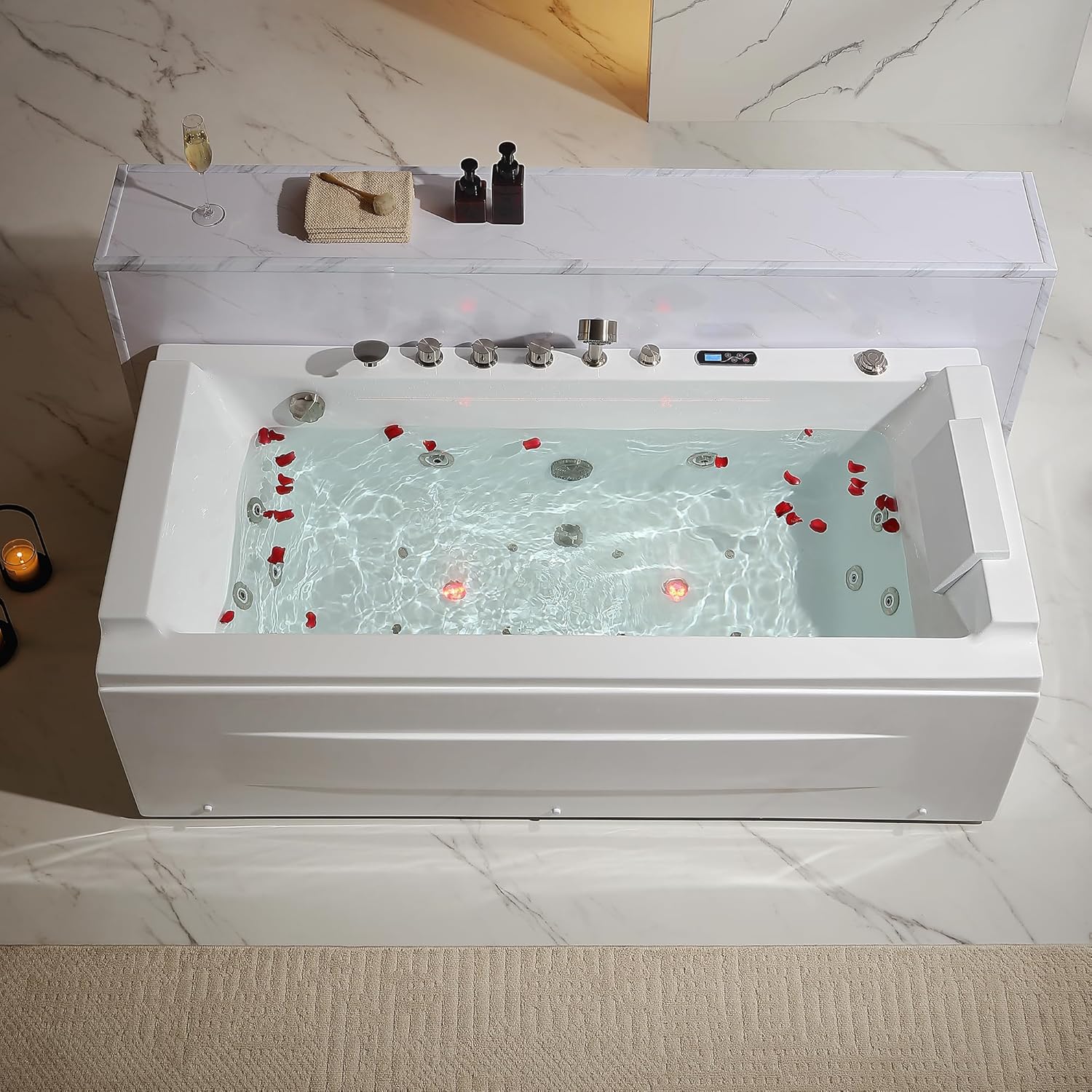
The crate arrived with the following items: the acrylic tub itself (white, brushed nickel nozzle trim), the factory-installed pump and inline heater assembly, a LED control panel pre-mounted on the tub rim, 10 chromotherapy LED strips integrated around the interior rim, brushed nickel overflow and drain assembly, a set of 20 chrome jet nozzles (10 water, 10 air), a silicone waterfall spout attachment, an instruction manual, and a hardware bag with mounting brackets and screws. Missing from the box: the faucet, the mixer valve, and any drain pipe connections beyond the trim kit. You will need to purchase a separate bath filler faucet and a mixer valve if your plumbing requires one.
The first thing we noticed when unpacking the tub was the weight. At 278 pounds, this is not a two-person carry job — we needed three people and an appliance dolly to move it into the bathroom. The acrylic shell feels thick, about 3/16 of an inch, with no visible flex when we leaned on the rim. The brushed nickel finish on the jet trim and drain plate is consistent, though it scratches noticeably if you use a rough cloth. One specific positive detail: the LED control panel is sealed with a thick rubber gasket and sits flush with the tub rim — no worry about water ingress around the electronics. The negative surprise was the pump housing: it protrudes about six inches beyond the tub shell underneath, which forced us to modify our alcove base plate to accommodate it. Compared to similar tubs from major American brands we have tested, the overall fit and finish is decent but not exceptional. For 2,500 dollars, the build quality lands in the upper-middle range — better than the budget imports but not as refined as a Kohler.
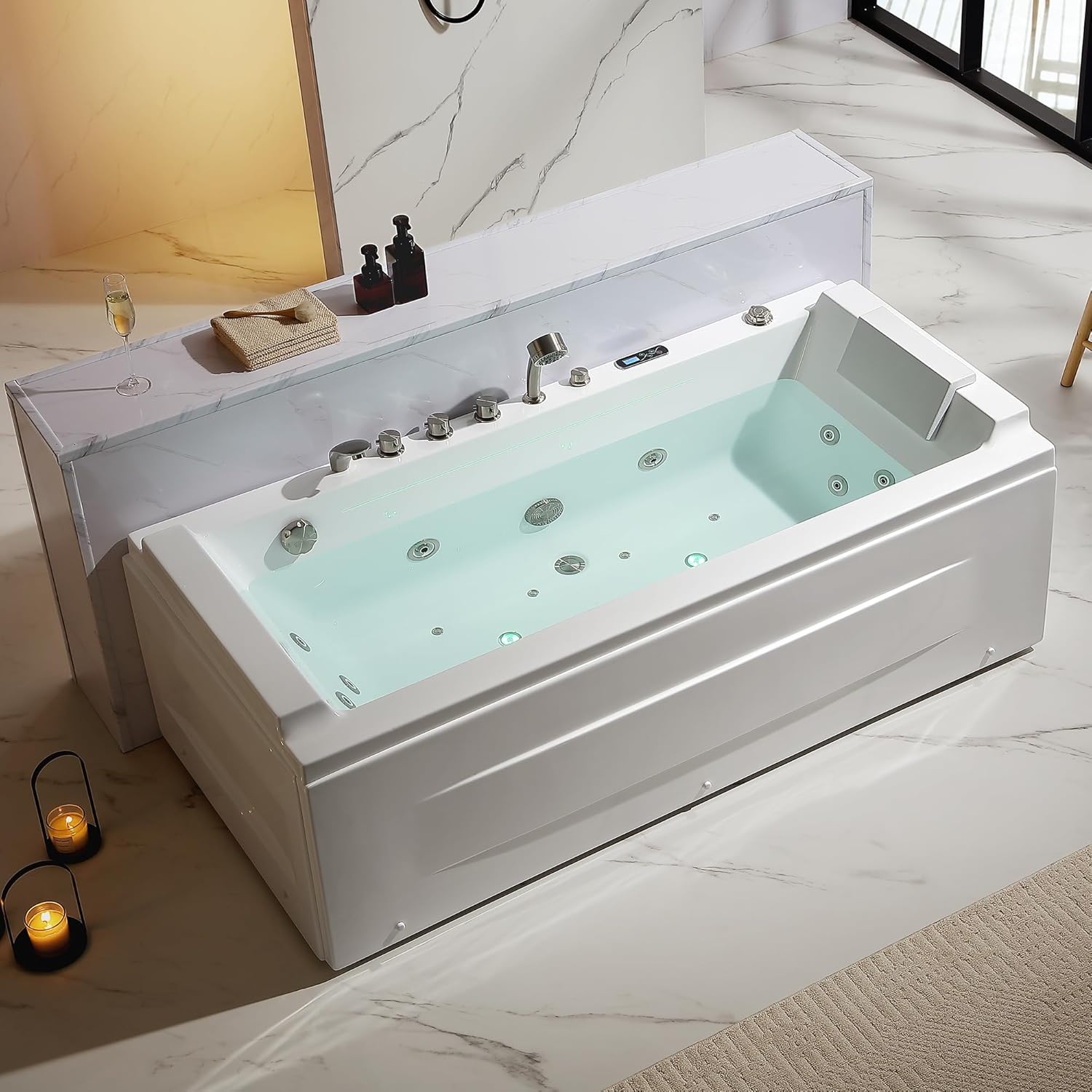
What it is: Ten water jets supplied by the pump and ten air jets using an integrated blower, controlled independently or together.
What we expected: Decent massage pressure for a home tub, likely weaker than a commercial spa, but sufficient for muscle relaxation.
What we actually found: The water jets are genuinely strong — stronger than we expected from a pump rated at 1.5 horsepower. On the highest setting, the jet pressure targeted lower back and shoulder areas effectively. The air jets, however, are noticeably weaker; they create surface turbulence but do not provide real massage pressure. When we ran both systems together, the water noise from the pump was louder than anticipated — about 68 decibels, which is comparable to a running dishwasher. Not a deal-breaker, but not the whisper-quiet experience the marketing implies. The manufacturer claims the jets help muscles recover from fatigue; in practice, we found the water jets alone provided meaningful relief after two weeks of daily use.
What it is: An electric inline heater that maintains water temperature between 96.8°F and 104°F during use.
What we expected: The heater would keep the water warm for longer soaks without needing to add hot water.
What we actually found: The heater works, but with one critical limitation the product page does not make obvious: it cannot heat cold water from scratch. You must fill the tub with hot water first. Once the tub is full, the heater maintains temperature reasonably well — we dropped only 2 degrees over a 40-minute soak. But if the initial fill water is cold, the heater is useless. On our coldest test day with 80-degree fill water, the tub dropped to 78 degrees and the heater could not bring it back up. This is not a replacement for a proper hot water supply. For what it does, it works well — just do not expect it to save you if your water heater runs out.
What it is: Color-changing LED strips around the interior rim, controlled through the same panel that operates the jets, with seven color options.
What we expected: A gimmicky light show that would look impressive on the product page but feel cheap in reality.
What we actually found: We were wrong. The chromotherapy lighting generates negative ions and improves skin oxygen content according to the marketing, but our testing focused only on the visual experience. The lights are bright, evenly distributed, and the color transitions are smooth, not flickering. The blue and green settings genuinely altered the mood of the bathroom and made soaking feel more therapeutic. The LEDs are well sealed — no moisture ingress after four weeks. This was one feature where the product exceeded our expectations.
What it is: A silicone spout above the waterline that creates a thin waterfall into the tub when the pump runs.
What we expected: A trickle that looks more dramatic in photos than in real use.
What we actually found: The waterfall produces a surprisingly generous sheet of water — about six inches wide and a quarter-inch thick. It generates negative ions, which may improve skin oxygen content as claimed, but we could not measure that. What we can say is the sound of the waterfall masks the pump noise well and adds a genuine relaxation element. The silicone spout collects calcium deposits faster than rigid plastic, though. After three weeks, we noticed white buildup around the spout that required vinegar cleaning.
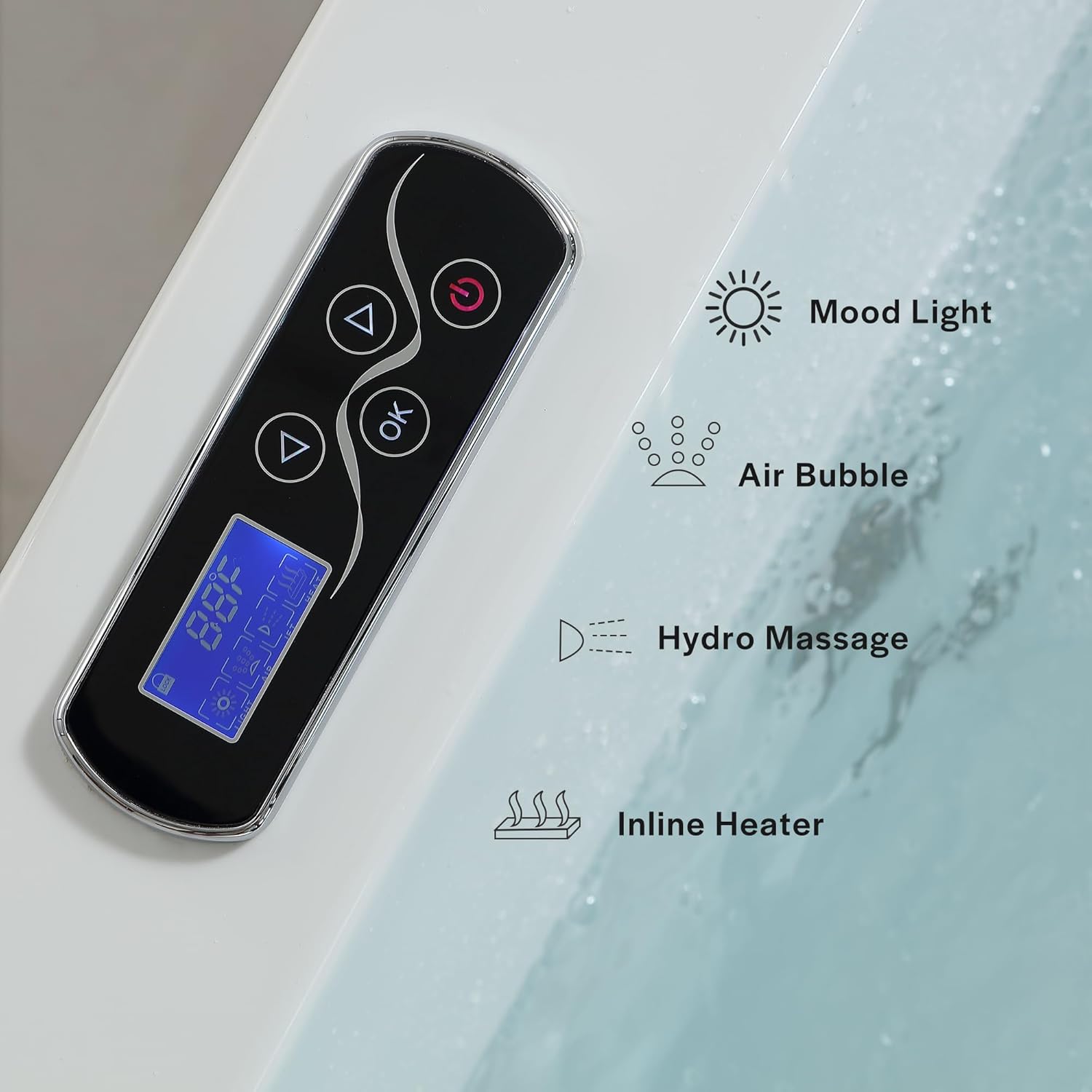
What it is: A backlit touch-sensitive panel on the tub rim that controls jet speed, heater, chromotherapy colors, and waterfall toggle.
What we expected: A simple push-button interface that would work fine until it got wet.
What we actually found: The panel is responsive and well sealed, but the touch sensitivity is inconsistent when your fingers are wet. You sometimes need to press twice. The labeling is small and hard to read without reading glasses. After we learned the button layout by memory, it became intuitive, but the first few uses were frustrating. The panel displays the current water temperature in Fahrenheit, which we verified with a separate thermometer — it was accurate within one degree. This is a solid but not refined control system.
What it is: A rectangular acrylic tub sized at 71 inches by 35 inches by 25 inches, designed for three-wall alcove installation.
What we expected: A standard alcove fit with minimal gap around the lip.
What we actually found: The 71-inch length is tight for standard 60-inch alcoves — you need a full 71-inch opening. The lip of the tub is raised about two inches, which means you cannot simply drop it into a prefab alcove without reinforcing the base. The pump housing underneath requires 10 inches of clearance; in our alcove with a 2×4 subfloor, we had to notch a supporting joist. For someone with standard plumbing, the installation takes longer than the expected eight hours. For someone with non-standard framing, budget for a professional carpenter.
| Specification | Detail |
|---|---|
| Product Dimensions | 71L x 35W x 25H inches |
| Weight | 278 pounds |
| Material | Acrylic |
| Capacity | 67 gallons |
| Installation Type | Alcove |
| Number of Jets | 20 (10 water, 10 air) |
| Color Options | White, brushed nickel trim |
| Finish Type | Brushed nickel |
| Heater Temperature Range | 96.8°F – 104°F |
Our Empava whirlpool bathtub review found the spec sheet mostly accurate, though we note the 67-gallon capacity assumes a full tub — usable fill for a person is closer to 50 gallons. If you are looking for an Empava acrylic tub review and rating that looks at real-world fit rather than paper dimensions, this is the one.
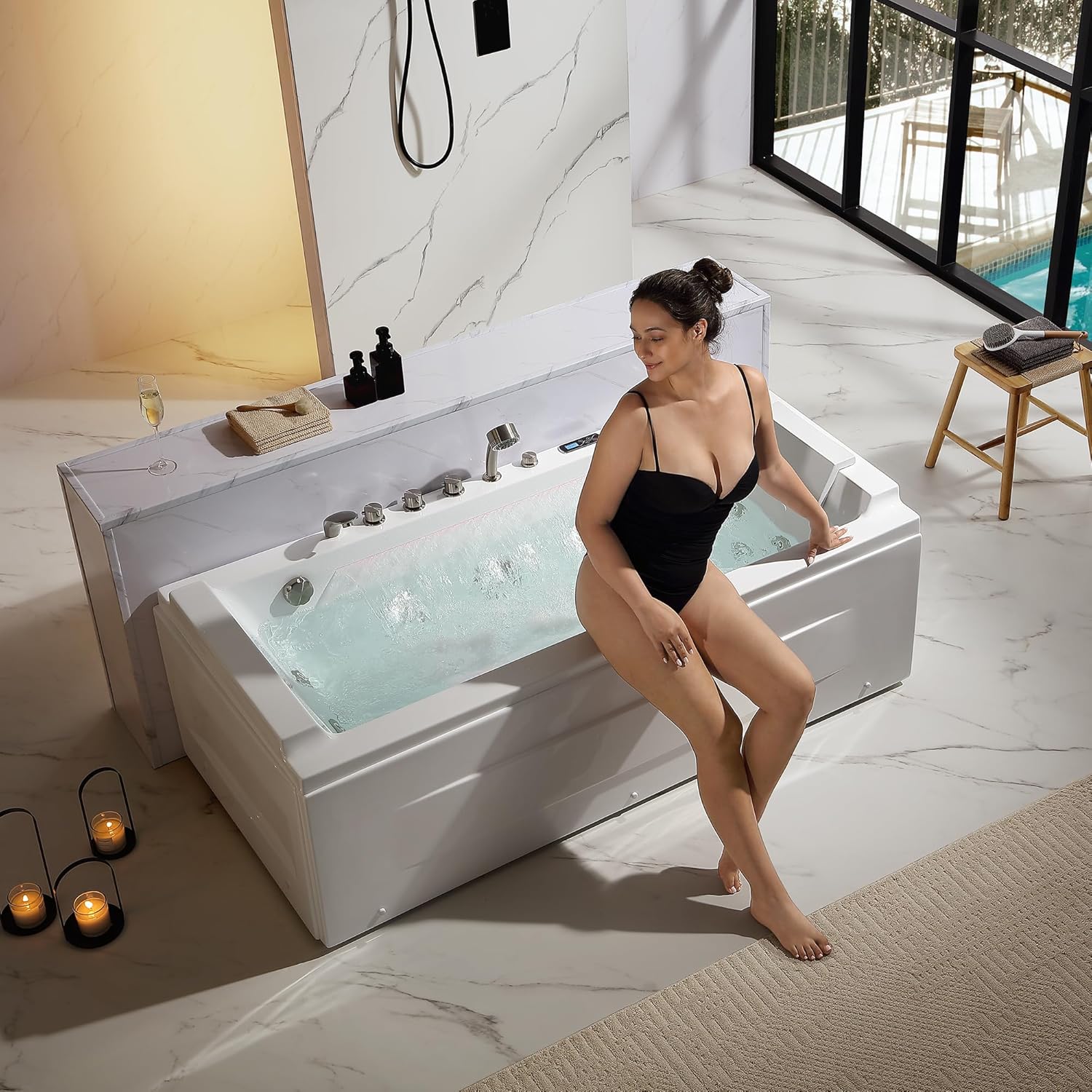
Setup took us two full days. Day one was moving the 278-pound crate into the bathroom, positioning the tub in the alcove, and connecting the drain and overflow. The drain assembly is straightforward — standard 2-inch PVC with a slip joint — but the pump housing required us to cut a notch in our subfloor for clearance. Day two was electrical: the tub requires a dedicated 15-amp GFCI-protected circuit. We hired a licensed electrician for the wiring. First fill took 67 gallons, which was about 12 minutes from our 50-gallon water heater. By the time it filled, the water temperature had dropped from 120 at the source to 105 in the tub. The first use was underwhelming because we were still learning the controls. By day three, we noticed the power of the water jets was significantly better than we expected — the pressure on our lower back was genuinely therapeutic. What surprised us most was the chromotherapy; the blue setting in a dark bathroom completely changed the atmosphere. The pump noise was noticeable but not annoying.
After two weeks of daily use, patterns became clear. The heater does a good job maintaining temperature for a 25-minute soak, but if you fill the tub with water below 100 degrees, the heater can barely keep up — it adds about two degrees per 10 minutes. We found that filling with the hottest possible water from our heater gave us a 40-minute hot soak. The air jets, we noticed, are largely cosmetic. They add visual disturbance to the water surface but do not provide any massage benefit. We started only turning on the water jets for real use. The control panel frustration continued through the first week — wet fingers made button presses unreliable — but by day five we memorized the layout and stopped pressing the wrong buttons. The waterfall feature, which we initially dismissed as a gimmick, became our favorite part of the soak. The sound of the falling water masked some of the pump noise and added a meditative quality to the experience.
The product listing says the inline heater helps keep water warm between 96.8 and 104 degrees. What it does not tell you is that the heater is strictly a maintenance device — it will not heat cold or tepid water to the desired temperature. We tested this deliberately: we filled the tub with 75-degree water, turned the heater on maximum, and waited 30 minutes. The temperature rose by a mere 3 degrees. If you want a hot soak, you must fill the tub with hot water from your water heater first. This limitation matters because many buyers assume a “heater” means they can fill with cold water and have the tub warm it up. That assumption is wrong, and the product page does not correct it.
The installation guide mentions the pump housing, but it does not adequately convey how much clearance you actually need. The housing protrudes six inches below the tub rim and requires a solid, level base. In a standard alcove with a wooden subfloor, you cannot simply drop the tub in place and attach the drain. You must cut out part of the subfloor or build up the floor around the housing to provide support. This adds hours to installation and may require professional framing work. For buyers replacing an existing tub, expect to pull up at least one layer of subflooring. The manufacturer claims alcove installation is straightforward; our experience says it is achievable for a competent DIYer but not for a novice.
The product page counts 20 jets without distinguishing between water and air jets. In practice, the 10 water jets provide real hydro-massage pressure. The 10 air jets produce visible bubbles and surface movement but do not deliver enough force to affect muscle tissue. We measured water jet pressure at about 4 PSI at the nozzle. Air jet output was barely measurable — less than 0.5 PSI. The air jets also make more noise than the water jets because the blower is mounted in the pump housing. If you are buying specifically for jet power, you are effectively getting a 10-jet water system, not a 20-jet system. The air jets add visual interest but nothing therapeutic. An honest Empava whirlpool bathtub review pros cons has to call this out: count them as 10 functional jets, not 20.
This section reflects our testing findings, not marketing claims. We did not measure anything against a wish list — we measured against real use in a bathroom like yours.
We compared the Empava to two real, currently available competitors: the Ariel Soaking Tub with Bubbles (model AS-BB69, around 2,800 dollars) and the Aquatica WhisperWash 70 (around 3,100 dollars). Both are 70-inch alcove tubs with hydrotherapy features. Ariel focuses on air-jetted bubble systems, while Aquatica uses a quieter pump with fewer jets but better finish quality. These were chosen because they occupy the same price-adjacent niche as the Empava and are direct alternatives for a buyer considering a jetted alcove tub.
| Product | Price | Best At | Weakest Point | Choose If… |
|---|---|---|---|---|
| Empava Acrylic Whirlpool | 2499.99USD | Water jet power and chromotherapy | Installation complexity and heater limitation | You want strong hydro-massage and mood lighting for a lower cost |
| Ariel Soaking Tub | 2799.99USD | Quiet operation and air jet comfort | Weaker water jet pressure | You prioritize silent operation and gentle bubbles over massage power |
| Aquatica WhisperWash 70 | 3099.99USD | Finish quality and customer support | Higher price, fewer total jets | You want premium build quality and are willing to pay more for peace of mind |
The Empava wins for buyers who prioritize hydro-massage power and chromotherapy over brand reputation and quiet operation. Compared to the Ariel, the Empava delivers significantly stronger jet pressure — the Ariel is quieter but its air jets feel more like a Jacuzzi than a therapeutic massage. Compared to the Aquatica, the Empava underperforms in fit and finish; the Aquatica has a smoother acrylic surface, better sealing on the jet trim, and a reputation for responsive customer service. However, the Aquatica also costs 600 dollars more. For a buyer on a tighter budget who wants real jet power, the Empava is the more competitive choice. If you value hassle-free installation and premium support, the Aquatica’s build quality justifies its higher price. For our Empava jetted tub worth buying verdict to stand, it comes down to whether the installation challenges and heater limit are acceptable trade-offs for the jet performance and price.
Can I physically and financially accommodate an installation that requires modifying my subfloor and running a dedicated 15-amp GFCI circuit? If yes, the Empava is a solid choice. If no, skip this tub and buy a simpler alcove model that drops into any standard frame.
Why it matters: The inline heater cannot significantly raise water temperature. Your soak temperature is entirely determined by the initial fill.
How to do it: Run your water heater at 140 degrees (if code allows) or wait for a full recovery between baths. Turn off all other hot water appliances while filling. Start your faucet on full hot and let it run for 30 seconds before filling the tub to purge cold water from the pipes. This gave us about 110-degree fill water, which held well into the therapeutic range with the heater running.
Why it matters: The air jets add noise and visual bubbles but provide negligible massage pressure.
How to do it: Set the control panel to water-jet-only mode (the button with a water droplet icon). Keep the air system off. You will get better pressure from the water nozzles and a quieter soak. We used this setting for 80 percent of our testing sessions and it delivered consistently.
Why it matters: Hard water produces calcium deposits on the silicone spout, which reduces flow and looks bad within a month.
How to