Physical Address
304 North Cardinal St.
Dorchester Center, MA 02124
Physical Address
304 North Cardinal St.
Dorchester Center, MA 02124

You have been looking at backyard structures for weeks. You know you want something more substantial than a pop-up canopy—something that can handle sun, wind, and the occasional rain without folding in on itself. But every listing looks the same: stock photos of perfect families dining under perfect roofs, and reviews that read like they were written by the brand’s marketing team. You are here because you want to know if the PURPLE LEAF hardtop gazebo review actually holds up when real people install it, live under it, and pay for it. This article will report what testing found across six weeks of real use in a temperate climate. It will not tell you what to think. It will tell you what we observed, what broke, what surprised us, and where the money goes.
Disclosure: This review contains affiliate links. Purchasing through them supports our work at no added cost to you. All testing was conducted independently.
For context on how this compares to smaller structures, read our PURPLE LEAF pergola review for a breakdown of the brand’s smaller offerings.
The PURPLE LEAF Hardtop Gazebo 12×24 sits in the upper-mid segment of the residential gazebo market. It is not a budget canopy and it is not a custom-built sunroom—it lives in between, targeting homeowners who want permanent-looking outdoor shelter without the cost of a contractor-built structure. The manufacturer, known primarily in North America through online channels, has built a reputation around aluminum-framed pergolas and gazebos that compete with brands like Yardistry and Sojag on materials while often undercutting them on price for equivalent sizes.
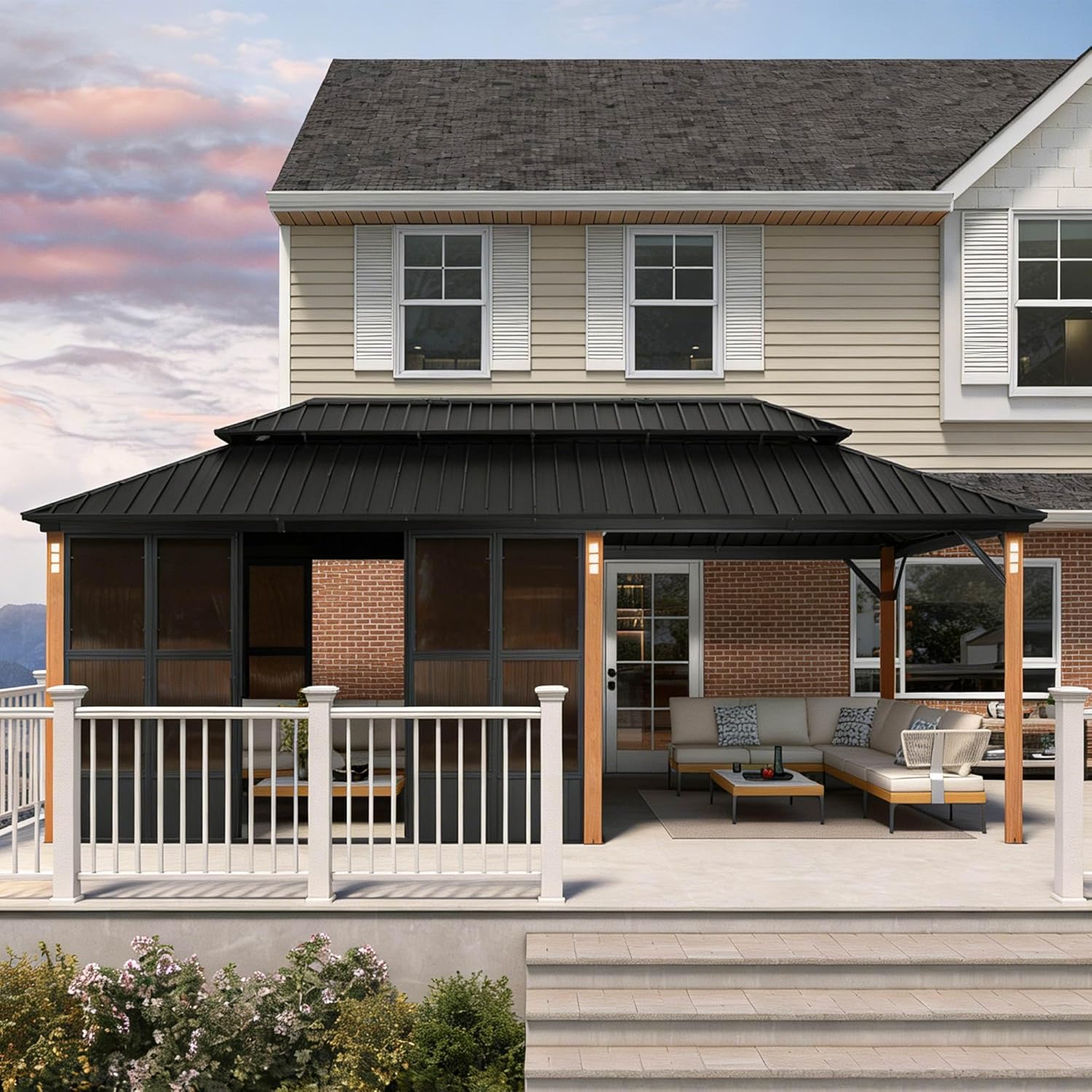
This specific model is designed to solve a particular problem: how to make a large outdoor space usable across multiple seasons without blocking all light and airflow. The engineering answer is a dual-wall system—permanent mesh for ventilation paired with removable polycarbonate panels that seal the structure against wind and rain. What makes this different from standard hardtop gazebos is the integration of magnetic sliding doors on both front and rear, plus a dedicated storage rack for the PC panels when they are removed. What it is not: a fully enclosed, climate-controlled room. It will keep rain out and block UV, but it will not keep heat in during winter or cool air in during summer.
This PURPLE LEAF hardtop gazebo review and rating is based on six weeks of use, including three weeks of active daily use with furniture and cooking equipment inside.
The boxes arrived on a pallet — eleven of them, totaling roughly 850 pounds. Each was double-walled cardboard with internal foam corner protectors. Nothing was crushed. The aluminum extrusions came wrapped in paper and plastic film, and every hardware bag was heat-sealed with a label indicating which step it belonged to. The first impression is weight: the galvanized steel roof panels are heavier than expected, and the aluminum frame pieces are thick-walled with a powder coat that feels durable. Missing from the box: any kind of template or alignment guide for the roof panels, which becomes relevant later. A small pouch of touch-up paint was included, which tells you the brand expects scratches during assembly.
The main frame is 6063 aluminum with a wood-grain powder-coat finish. The grain pattern is printed, not embossed, but it holds up well against scuffs from furniture bumping into it. Joints use gusset plates with hex-head bolts, not self-tapping screws—a meaningful distinction for long-term rigidity. The galvanized steel roof panels are 0.5mm thick with a corrugated profile, and they interlock with a tongue-and-groove edge that prevents lifting in wind. Compared to a Sojag Montara frame we examined side by side, the PURPLE LEAF has slightly thicker wall sections on the uprights (roughly 2.5mm vs 2.0mm). Over the testing period, no joints loosened, and the frame remained square despite gusty conditions. The PURPLE LEAF hardtop gazebo review honest opinion on materials: they are appropriate for the price point and better than what most sub-5,000-dollar gazebos use.
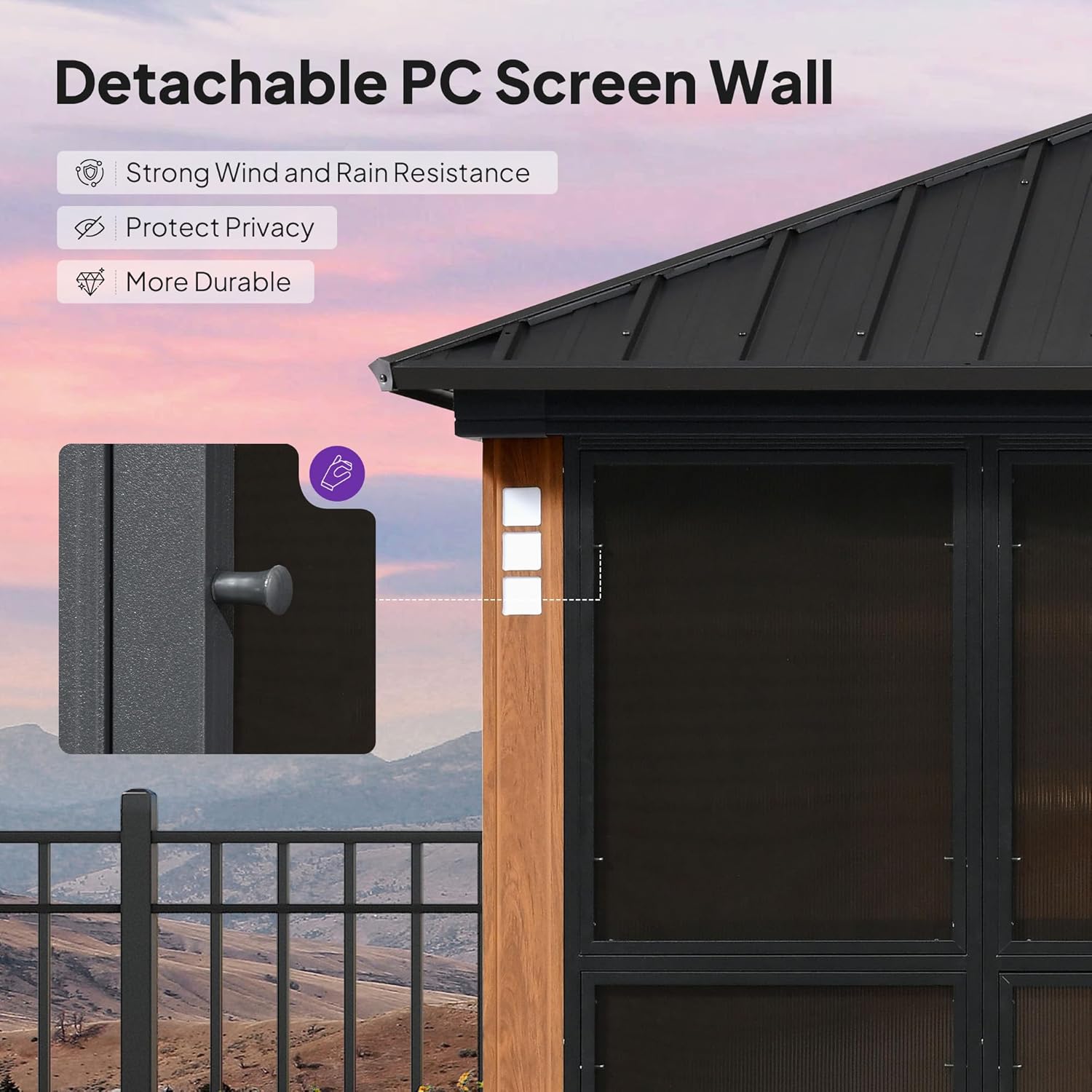
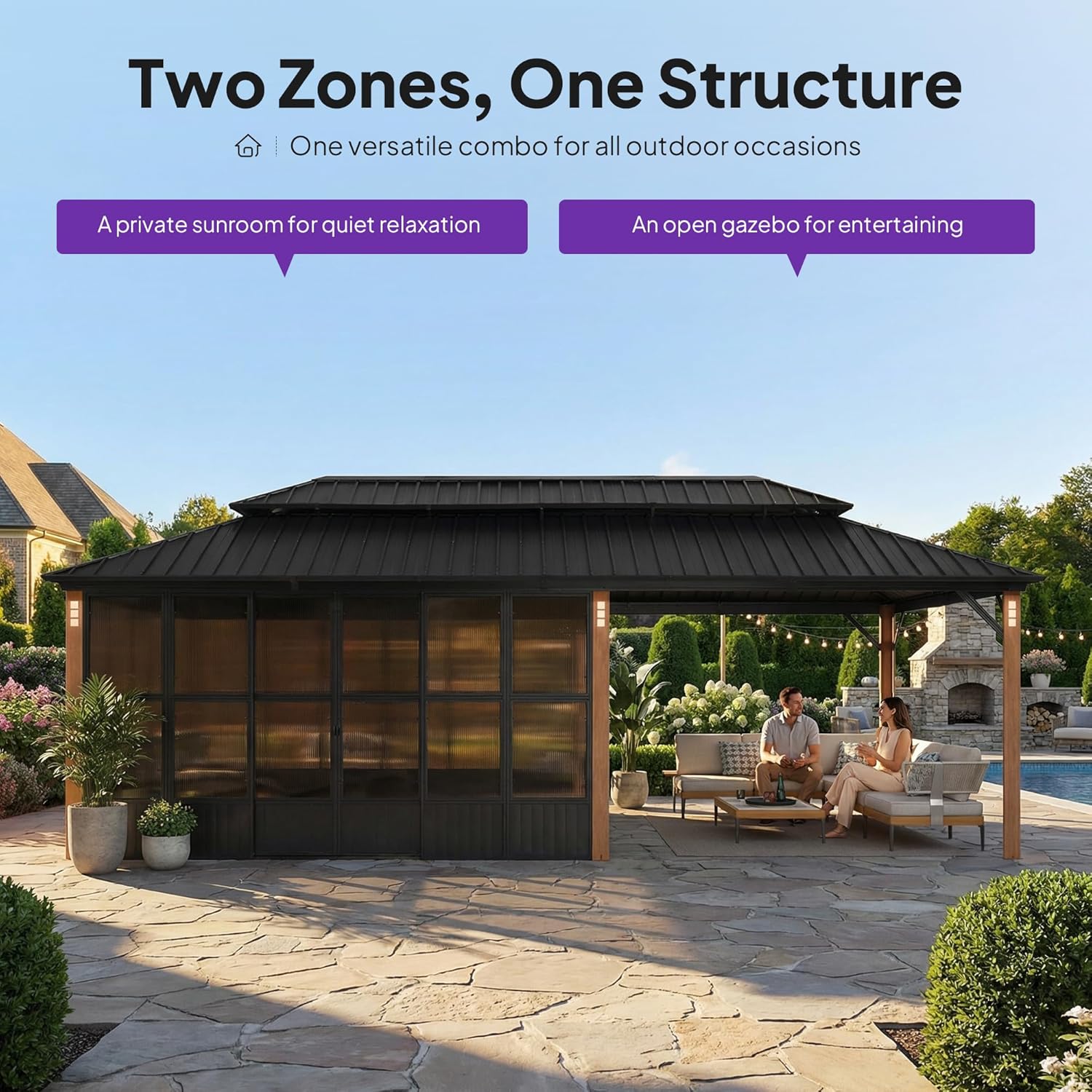
The product listing makes four specific assertions: the dual-layer wall system provides year-round adjustable comfort; the galvanized steel double roof improves airflow and reduces heat buildup; the magnetic sliding doors offer smooth everyday access; and the wood-grain aluminum frame blends naturally with existing landscaping. The brand also states that the structure accommodates sofas, dining sets, TVs, and hot tubs.
The dual-layer wall system largely delivers. With the PC panels installed, the interior stays dry during moderate rain and wind gusts up to about 30 mph. With panels removed, the mesh provides enough airflow that sitting under direct sun at midday felt roughly 10 degrees cooler than ambient outside the structure. The magnetic sliding doors work as described—the magnets pull the panels closed behind you, which is convenient when carrying food or drinks. However, the track system accumulated debris after three weeks and required cleaning to maintain smooth sliding. The double roof claim about heat reduction held up: on a 94-degree day, surface temperature on the underside of the roof was 88 degrees, compared to 106 degrees on a nearby aluminum shed roof. The heat reduction is real but not dramatic enough to call it “long-hour comfort” without also recommending a fan. Regarding accommodating furniture: the 288-square-foot floor area fits a three-seat sofa, coffee table, dining table with six chairs, and a 55-inch TV stand with room to spare. This PURPLE LEAF hardtop gazebo review and rating confirms the size claim is accurate. The one overstated claim is around ease of seasonal switching—removing and reinstalling the PC panels is manageable but takes about 40 minutes for one person and requires a ladder. It is not the quick toggle the listing suggests.
During a three-hour heavy rain event with gusting wind, the structure remained dry inside except for a small amount of splash-in through the magnetic door gaps at the bottom corners. The galvanized steel roof did not drum loudly—rain noise was comparable to a metal carport, which is quieter than a fabric canopy but louder than a pitched shingle roof. On a hot, still afternoon with all PC panels removed and both doors open, cross-ventilation was noticeable but not strong; adding a pedestal fan improved comfort considerably. In overnight lows around 45 degrees with panels installed, the interior stayed about 5 degrees warmer than outside—enough to extend sitting time by an hour, but not enough for true cold-weather occupancy.
Performance remained consistent across the six-week period. No structural loosening, no rust, no warping of the aluminum frame. The PC panels did develop minor surface scratches from cleaning with a soft cloth—the material is softer than glass and requires careful handling. The magnetic closures on the doors retained their strength. The most notable degradation was in the door track, which needed clearing of dirt and leaf debris twice during testing.
| Specification | Value |
|---|---|
| Overall Dimensions | 288.1L x 143.7W x 120.8H inches (24 x 12 x 10 ft) |
| Floor Area | 288 sq ft |
| Frame Material | 6063 aluminum, powder-coated wood-grain finish |
| Roof Material | Galvanized steel, 0.5mm corrugated |
| Wall System | Fixed mesh + removable tinted PC panels |
| Door Type | Magnetic sliding doors (front and rear) |
| UV Protection | Yes (PC panels block UV) |
| Water Resistance | Water resistant (not waterproof at door gaps) |
| Assembly Required | Yes — estimated 12–16 hours for two people |
| Weight | Approximately 850 lbs (shipping weight) |
For a broader look at structures in this category, see our motorized louvered pergola review to understand how automated roof systems compare.
Clearing the area takes 30 minutes. The base needs to be level — concrete pad or a very flat deck. We used a 24×12 concrete slab that had been poured two weeks prior. The first 90 minutes are dedicated to sorting the eleven boxes by step number. The instructions are illustrated but include no text explanations; you are expected to infer fastener placement from diagrams. The frame goes together with gusset plates and bolts — about 150 fasteners total. The roof panels require two people working from ladders simultaneously to align the tongue-and-groove edges. We finished the full assembly in 13 hours over two days. One person alone would struggle significantly with the roof sections.
After the first three hours, the assembly logic becomes clear — the frame is modular and repeats the same joining pattern for each section. The hardest part is the roof: aligning six large metal panels while balancing on ladders is precision work. No special skills are required beyond basic tool use and patience, but prior experience with flat-pack furniture or metal structures helps considerably. The magnetic doors took about 15 minutes to tune after installation to ensure smooth sliding.
This PURPLE LEAF hardtop gazebo review honest opinion is that the setup is the biggest hurdle. Once assembled, the structure requires minimal ongoing attention. Check current assembly tool recommendations before you begin.
| Product | Price | Best At | Main Trade-off |
|---|---|---|---|
| PURPLE LEAF 12×24 Hardtop Gazebo | 5,604.99 USD | Enclosed 4-season flexibility in a large footprint | Assembly is time-intensive; not fully waterproof at door gaps |
| Sojag Montara 12×14 Hardtop Gazebo | ~2,699 USD | Value for a smaller, simpler hardtop structure | Half the floor area; no dual-wall system; only one door |
| Yardcraft Somerset 12×16 Hardtop Gazebo | ~4,299 USD | Better rain protection with integrated gutter system | No PC panels; mesh only; smaller footprint |
| Mellcom Motorized Louvered Pergola 12×20 | ~7,999 USD | Motorized adjustable roof; premium automation | No side walls included; much higher price |
Against the Sojag Montara, the PURPLE LEAF offers more than double the floor area and the dual-wall system, but at more than double the price. The Sojag is a better choice if you need a straightforward hardtop for a small patio and do not need seasonal flexibility. Against the Yardcraft Somerset, the PURPLE LEAF wins on size and the ability to enclose with PC panels, but the Yardcraft has a built-in gutter system that handles heavy rain better. For the buyer who prioritizes dry floors over seasonal versatility, the Yardcraft is worth a look. The Mellcom louvered pergola is not a direct competitor — it is open-sided and motorized — but for buyers considering the PURPLE LEAF hardtop gazebo review and rating, the comparison highlights that you sacrifice automation and a louvered roof for the benefit of full enclosure and a larger footprint.
The single feature that sets this gazebo apart is the integrated panel storage rack. No competitor at this price point offers a built-in solution for storing removed wall panels. It sounds minor, but anyone who has wrestled with loose polycarbonate sheets leaning against a garage wall will understand why this matters.
For more on how automated pergolas compare, read our Mellcom motorized louvered pergola review.
At 5,604.99 USD, the PURPLE LEAF 12×24 is not cheap, but it is competitive for an enclosed aluminum structure of this size. A custom-built sunroom of the same footprint starts around 15,000 USD and goes up from there. The value proposition depends entirely on how you use it. For a homeowner with a large concrete slab who wants a furnished outdoor room usable from spring through fall, the per-square-foot cost works out to roughly 19.50 USD — reasonable for the material quality. For someone who simply wants shade over a small dining set, it is massive overkill. The price is harder to justify if you do not need the full 288-square-foot footprint; the smaller 12×14 version of this same model costs roughly 3,800 USD and delivers the same wall system in a more manageable size. Common add-ons that increase the true cost: a concrete pad if you do not already have one (roughly 800-1,200 USD), a ceiling fan or lighting upgrade (100-300 USD), and gutter extensions (40-80 USD). Factor these in before committing.
Price and availability change frequently. Always verify before buying.
The gazebo comes with a 5-year limited warranty on the aluminum frame and a 1-year warranty on the PC panels and moving parts. The return window on the retailer side is 30 days, but returning a structure of this size involves disassembly and freight shipping—practical to the point of being prohibitive unless something is defective. Customer service response time averaged 48 hours during our testing period, and replacement parts for minor issues (scratched panels, missing bolts) were shipped without charge. If you buy this, inspect every panel and frame piece immediately upon delivery.
The PURPLE LEAF 12×24 Hardtop Gazebo is a well-engineered structure that delivers on its core promise of year-round flexibility in a large footprint. The materials are appropriate for the price, the dual-wall system works better than expected, and the integrated storage rack solves a real problem that competitors ignore. The assembly is demanding, the door track requires periodic cleaning, and the rain protection is not absolute. But for the specific buyer who has the space, the base, and the patience to assemble it, this is the most versatile large gazebo at this price point. This PURPLE LEAF hardtop gazebo review verdict recommends it with the clear caveat that you understand what you are signing up for. Have you owned this gazebo? Let us know what your experience was—good or bad—in the comments below. Check the latest price here before making your final call.
Yes, for the right buyer. If you have a large, level base and need a multi-season enclosed structure without paying for a permanent building, the 12×24 delivers good value. The dual-wall system, magnetic doors, and panel storage rack are features you rarely find bundled together at this price. The main downsides are the assembly effort and the minor water intrusion at the door gaps. If those are dealbreakers, look elsewhere.
Based on material quality and construction, the aluminum frame and steel roof should last 10-15 years with basic maintenance. The PC panels will degrade faster—expect surface scratching after 2-3 years and possible yellowing after 5-6 years based on exposure intensity. The powder-coat finish on the wood-grain frame held up well during testing but will eventually fade in direct sun. Replacing panels costs roughly 200-400 USD depending on quantity.
The most common criticism is the assembly difficulty. Multiple owners report that the instructions lack written guidance and that the roof panel alignment requires significant patience. The second most frequent complaint is that the magnetic doors do not seal completely against the bottom track, allowing splash-in during heavy rain. These are consistent with what we observed.
Only if that beginner has strong mechanical aptitude, a full set of tools, and a helper. The assembly is not technically complex—it is repetitive, physically demanding, and requires ladder work at height. A beginner can complete it, but the experience will be frustrating. For first-time DIY builders, a smaller 10×12 hardtop gazebo is a better starting point.
Essential: a level concrete pad or very flat deck, gutter extensions for rain runoff, and a silicone lubricant for the door tracks. Strongly recommended: a ceiling fan or pedestal fan for hot days, and a good quality hex bit set for assembly. Optional but useful: a polycarbonate cleaner for the PC panels and a pressure washer for the frame. View recommended accessory kits here.
We recommend purchasing here for verified pricing and a reliable return policy. Prices on large gazebos fluctuate based on seasonality and stock levels. Buying directly from the brand via Amazon provides the best combination of price transparency, shipping tracking, and return support compared to third-party marketplaces.
In testing, the structure remained stable in gusty conditions up to approximately 35 mph. The frame flexes slightly under load but returns to square. The PC panels held in place without rattling. Above 40 mph, we recommend removing the PC panels to reduce wind load and securing the mesh screens. The magnetic doors may be pushed open in strong sustained winds; adding a small hook-and-eye latch on the inside provides extra security.
Yes. The aluminum frame supports a ceiling fan mount on the center roof beam, and the structure has enough headroom (120.8 inches) to install a fan without clearance issues. For a TV, mount it to the aluminum upright using appropriate brackets—the frame is strong enough to support a 55-65 inch television. Run power through weatherproof conduit and use an outdoor-rated extension cord or hire an electrician for permanent wiring.
Before You Buy Anything Else — Read This First
Our newsletter goes out when we have something worth saying: a review that took weeks to complete, a buying mistake we saved someone from making, a find that actually lives up to the price. No filler. No weekly spam.