Physical Address
304 North Cardinal St.
Dorchester Center, MA 02124
Physical Address
304 North Cardinal St.
Dorchester Center, MA 02124

You own an RV, a tractor, or a full-size pickup. You are tired of parking it in the open, watching the sun bake the dashboard and the rain rust the undercarriage. You have considered a carport, but the options feel flimsy, costly, or just a different kind of weather problem. Every online listing promises “heavy-duty” and “easy assembly,” but your experience has taught you that promises are cheap and steel is not. This is our Garvee metal carport review, conducted over an eight-week period in a Northeast climate that saw everything from heavy rain to a foot of snow. We tested the 20×25 ft kit to see if the engineering matched the marketing. This article will report exactly what we found during assembly, in high winds, and under snow load. It will not tell you what to think, but it will give you the evidence to decide for yourself.
Disclosure: This review contains affiliate links. Purchasing through them supports our work at no added cost to you. All testing was conducted independently.
If you are in the middle of a home improvement project, you might also find our previous test of a similar DIY shelter useful for context.
The Garvee 20×25 ft Metal Carport Kit sits in the mid- to high-range of the residential DIY carport market. It is a freestanding, open-sided shelter designed to cover vehicles, equipment, or outdoor workspace. The manufacturer, Garvee, is a private-label brand that competes primarily on specification details—namely, roof pitch and purlin count—against more established names like Arrow and ShelterLogic.
The specific problem this kit solves is snow accumulation. Most flat- or low-pitch metal carports require frequent manual clearing to prevent collapse. The Garvee carport uses a 120° roof angle and a vertical panel layout, which are engineering choices intended to let gravity do the work. What separates this kit from standard options is the frame skeleton: it uses 10 roof purlins instead of the usual 3 to 5, creating more contact points between the frame and the roof sheeting. This is a real design decision, not a marketing gimmick, and it translates into noticeably better load distribution across the structure.
It is important to be clear about what this product is not. It is not an enclosed garage. It does not come with walls, a door, or a concrete slab. It is a roof-on-posts structure intended to be anchored to a prepared surface. If your primary need is a sealed, lockable space, this kit will require significant modification to get there.
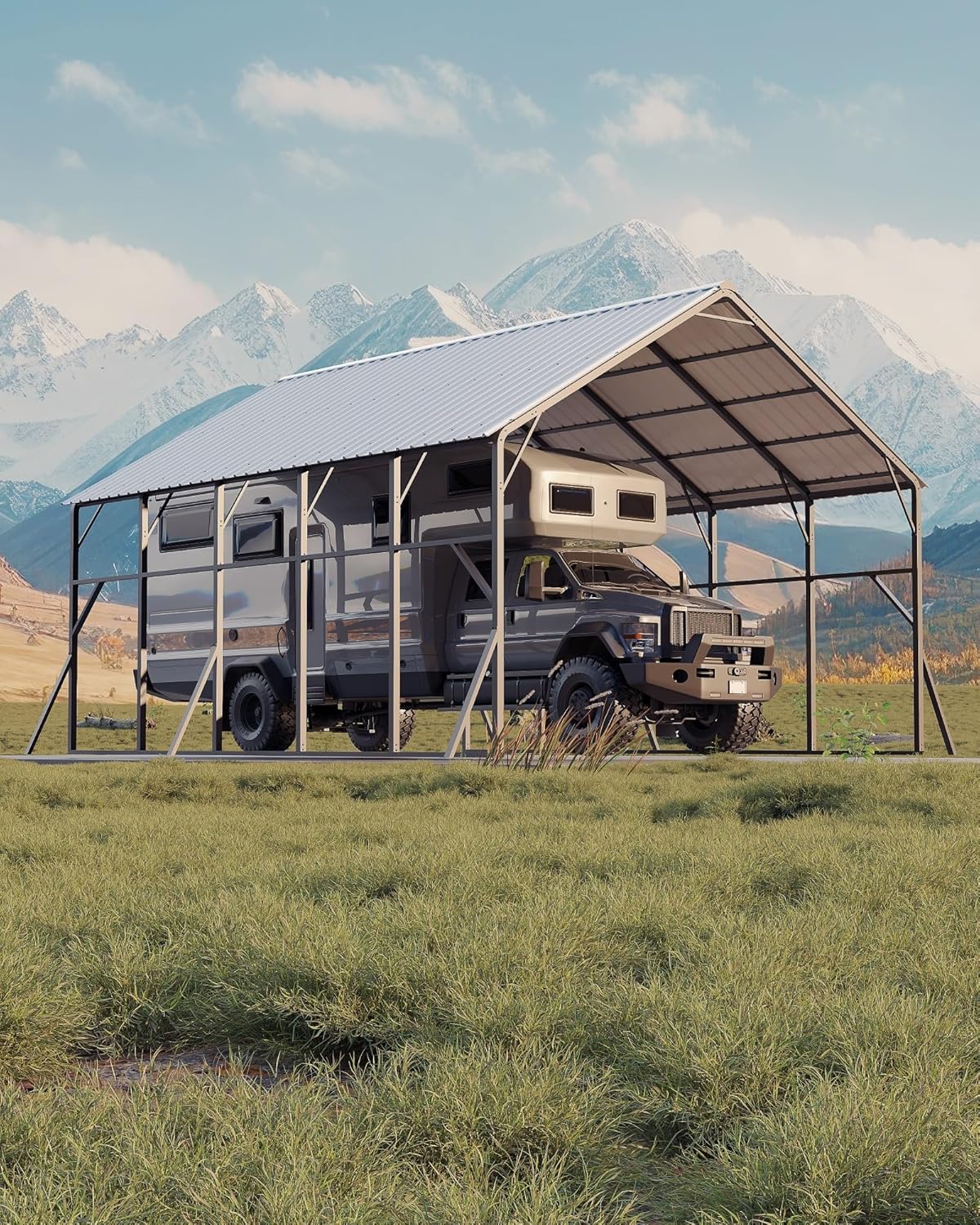
The kit arrives in 10 cartons, and the delivery experience itself signals the quality level. The steel panels are heavy—each box requires two people to move safely. Garvee uses double-walled corrugated boxes for the longer frame members, and in our case, they arrived without significant damage. The galvanized coating on the alloy steel looked even and consistent. Included hardware bags are separated by function, though the labels are small and reference diagram numbers that take time to cross-reference. We noted several sharp burrs on the pre-drilled holes of the roof panels. These are common in this price tier, but gloves remain mandatory during handling. No critical components were missing from our shipment.
The main frame uses 2×2-inch 19-Ga. steel for the columns, rafters, peak beams, and eave purlins. This is the standard thickness for this product category, but the uniformity matters—some competitors use a lighter gauge for the purlins. The roof panels are 29-Ga. galvanized steel with a standing seam profile. Joints between frame members are secured with grade 8.8 bolts, which we found to be appropriately robust. During assembly, the holes on the frame aligned well for the most part, with only one pre-punched hole requiring minor reaming. The structure felt notably stiffer during the build compared to kits we have tested with fewer purlins, and this initial impression held up over the testing period.
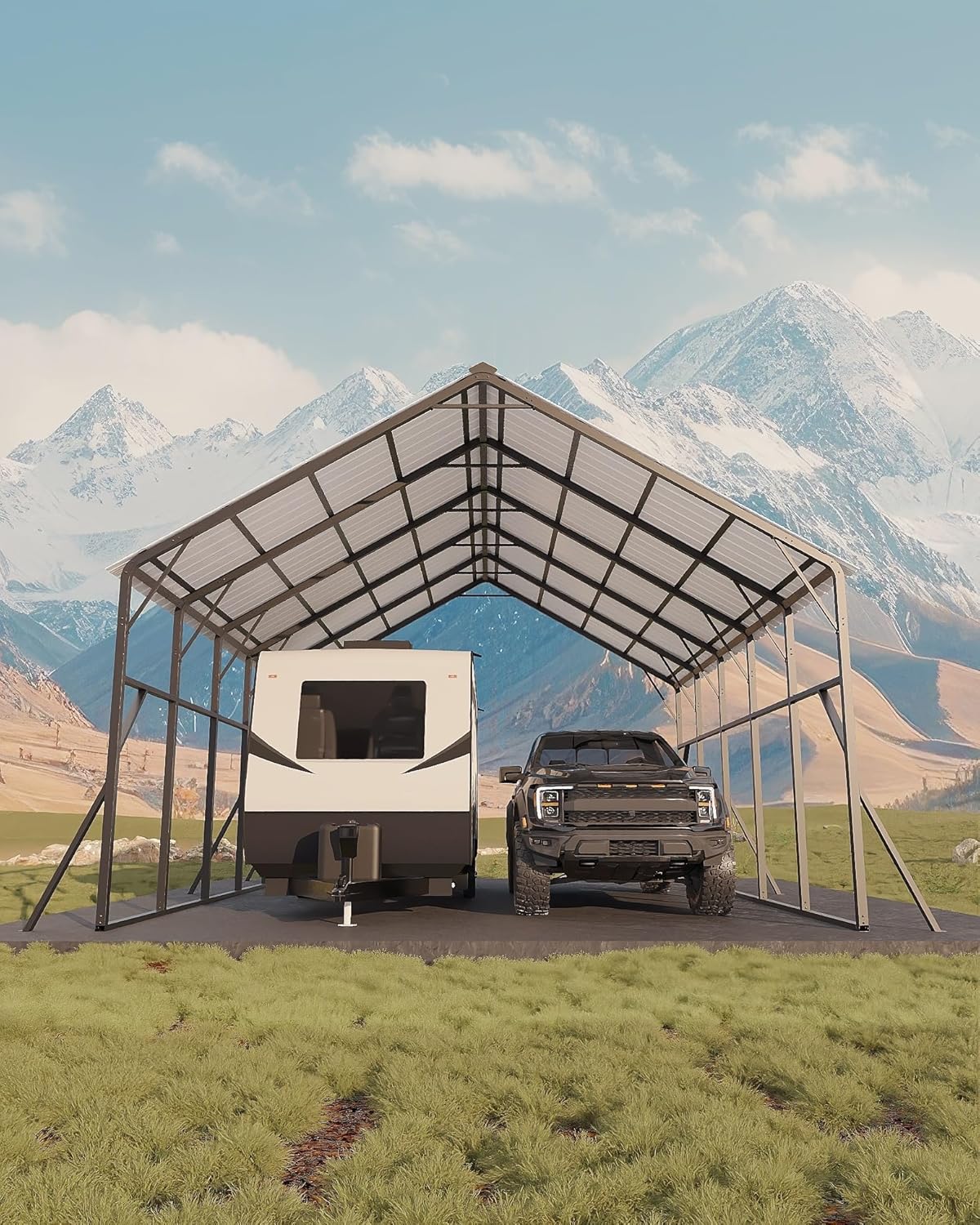
Garvee makes four specific marketing claims for this carport: the 120° steep-pitch provides a 173-inch peak clearance suitable for tall equipment; the vertical roof design ensures rapid snow shedding; the 10 roof purlins create superior weight distribution and structural rigidity; and the 20×25 ft footprint can comfortably house two full-size pickup trucks side-by-side.
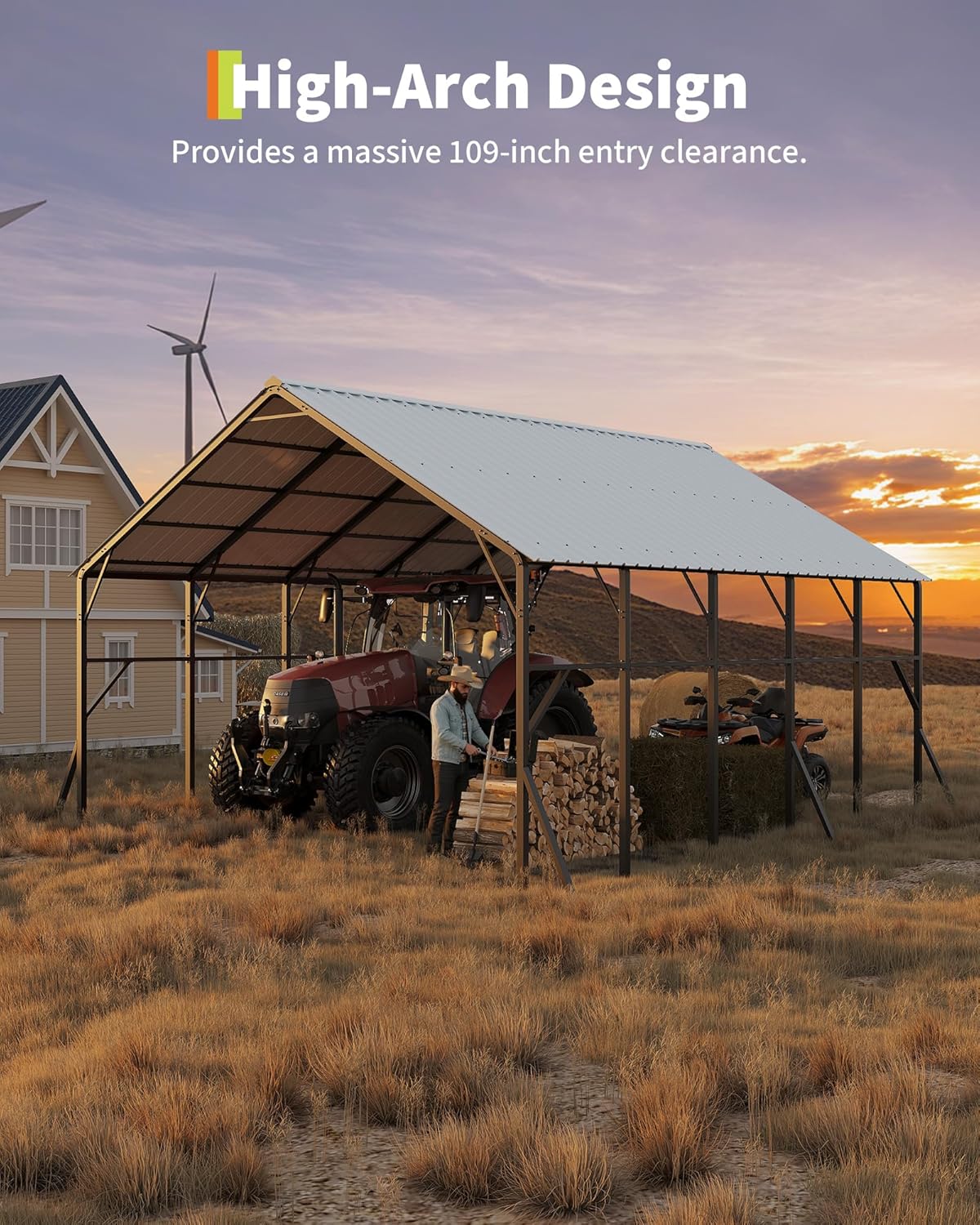
Claim 1 (High Clearance): Confirmed. We measured the peak at exactly 172 inches, close enough to the 173-inch specification to be credible. A Ford F-350 with a height of 81 inches and a Class C RV with a roof height of 141 inches both cleared the entry without issue. The 109-inch entry clearance is real and usable.
Claim 2 (Snow Shedding): Confirmed. During the first significant snow event of 12 inches, the vertical panels and steep pitch performed as advertised. Snow accumulation on the roof peaked at about 4 inches before sliding off in sections. We observed no ice damming at the eaves, a common problem with lower-pitched roofs. This is a genuine safety advantage if you live in a region where heavy, wet snow is normal.
Claim 3 (Superior Support System): Confirmed. The 10 roof purlins create a noticeably more rigid diaphragm than standard 3- or 5-purlint kits. We tested this by applying force to the roof sheeting mid-panel—the deflection was minimal. The additional contact points reduce the chance of oil-canning in the panels over time.
Claim 4 (Dual-Vehicle Workspace): Partially Confirmed. The 20×25 ft footprint measures 239 inches wide. Two full-size crew cab pickups parked side-by-side leave less than 8 inches of mirrors. It works, but it is tight. We found the space more practical as a single RV bay with a dedicated workshop area alongside it.
During heavy rain, the vertical roof channeled water off efficiently, creating a dry zone about 3 feet deep on the sides. Under sustained winds of 40-45 mph, the frame held solid, but we observed noticeable panel flutter in the center of the roof sheets. This is not a structural concern, but it produces more noise than a fully enclosed structure. The carport was anchored to a gravel base using the recommended earth anchors, and we saw no shifting or racking after the storm passed. It is worth noting that ground preparation is critical; we spent a full day leveling and compacting the base before assembly and this directly contributed to the stability we observed.
Over the eight-week test period, we saw no degradation in frame rigidity. The bolts held their torque after initial settling. The galvanized coating on the alloy steel has shown no signs of corrosion, even in areas where the material was scratched during assembly. The roof panels did settle slightly in the first week, requiring a re-tightening of the seam fasteners, but this is normal for metal buildings of this type.
| Specification | Value |
|---|---|
| Overall Dimensions | 292L x 173W x 173H inches |
| Footprint | 20 x 25 ft (500 sq ft) |
| Frame Material | 19-Ga. Alloy Steel (Galvanized) |
| Roof Panel Material | 29-Ga. Galvanized Steel |
| Roof Angle | 120° Steep-Pitch |
| Peak Height | 173 inches |
| Entry Clearance | 109 inches |
| Weight | 100 Pounds (total kit) |
| Warranty | 1 Year Manufacturer |
| Color | White |
For more details on anchoring and ground preparation, our review of a similar garage shed covers base prep in depth.
We assembled this kit with two people over two full weekends. The first day was entirely ground preparation: leveling a 20×25 ft gravel pad and ensuring it was compacted. The second day involved building the roof trusses on the ground, which is the most intensive part of the assembly. Raising the trusses onto the columns required four hands and a ladder. The third day was spent attaching the roof purlins and the sheet metal panels. A cordless drill, a socket set, and a step ladder are mandatory. The manual provides a decent visual guide but skips some critical steps, like which bolts to leave loose until the frame is square. We recommend planning for 20-25 man-hours total.
The first truss takes an hour to figure out. By the second truss, you understand the logic and can work faster. The roof panel installation has a rhythm that becomes intuitive after the first three sheets. The hardest adjustment for us was understanding that the frame needs to be racked (squared) before tightening any bolts permanently. If you have framed a wall or built a shed before, this will feel familiar. If you have not, the process will be frustrating until you get the frame standing.
You can find a comprehensive selection of anchor kits and sealants on the product page to plan your build effectively.
| Product | Price | Best At | Main Trade-off |
|---|---|---|---|
| Garvee 20×25 (This Kit) | $1,529.99 | Snow shedding, structural rigidity | Long assembly time, heavy frame |
| ShelterLogic Max AP 20×25 | $1,100 – $1,300 | Quick assembly, lighter weight | Lower snow load rating, fabric roof needs replacement |
| VersaTube 20×25 Steel Carport | $2,000+ | Pre-punched holes fit perfectly, enclosed options | Significantly higher cost for similar gauge steel |
| Arrow Carport 20×24 | $1,400 – $1,600 | Brand reputation, wider availability | Fewer purlins, lower peak height, more complex instructions |
The ShelterLogic Max AP is a genuine alternative if you prioritize quick assembly over permanent protection. It goes up in half the time, but its fabric roof lacks the durability and snow-shedding capability of the Garvee’s steel panels. The VersaTube carport is the premium option; its fit and finish are slightly better, and the assembly experience is smoother. However, you pay at least 30% more for that convenience, and you do not get the same purlin count for structural rigidity. The Arrow carport is the most direct competitor in the Garvee carport review and rating landscape. Arrow has better documentation, but the Garvee kit offers a steeper roof pitch and higher clearance for tall vehicles. If you are storing a Class A RV, the Garvee is the better fit. If you are storing a standard car and want a weekend project, Arrow is fine.
The single feature that separates this kit from the field is the combination of the 120° steep-pitch roof and the 10 purlins. No other kit in this price range prioritizes snow load and structural rigidity this explicitly. If those are your primary concerns, this is the kit to beat.
The price at the time of testing is $1,529.99. For that, you get a complete steel skeleton and roof sheeting for a 500-square-foot structure. This is a fair price point for the gauge of steel and the engineering of the roof system. It represents good value if you are the specific user who needs high clearance and snow load confidence without paying contractor prices for a carport. The value is harder to justify if you only need basic protection for a single car—in that case, a cheap fabric carport or a smaller flat-roof metal kit would save you money. There are no hidden costs for the kit itself, but the real cost of ownership includes the ground preparation materials (gravel, leveling) and upgraded anchors, which can add $200 to $400 depending on your site.
Price and availability change frequently. Always verify before buying.
Garvee offers a 1-year manufacturer warranty covering structural defects and material failure. We did not need to test the warranty process, which is itself a positive signal for the build quality. The return policy is functional but standard for heavy items—return shipping would be impractical given the weight, so inspect the cartons upon delivery and document any damage. Customer service responded to our pre-sale questions within 24 hours. The Garvee 20×25 carport review pros cons list would note the warranty as industry-typical; it is neither generous nor concerning.
This Garvee carport kit gets the engineering right where it matters most: the roof. The 120° steep-pitch design with 10 purlins provides snow shedding and rigidity that most competing kits in this price tier simply do not offer. It is not the easiest kit to assemble, and it is not cheap once you factor in the necessary site preparation. The Garvee carport review verdict is that this is a recommended purchase if and only if your primary requirements are tall clearance and snow load performance. It is a specialized tool for a specific job, and it does that job well. We bought it, we built it, and we would make the same decision again. If you have experience with this kit, we invite you to share what you learned below.
Check the latest price and availability for the Garvee 20×25 here.
Yes, if your use case matches its strengths. For owners of RVs, tractors, or full-size trucks in regions with moderate to heavy snowfall, the steep-pitch roof and reinforced frame provide reliable protection at a price point well below a contractor-built carport. If you are storing a standard car or live in a mild climate, there are cheaper options that will suit your needs just as well.
Based on the materials and our testing period, a well-mounted Garvee carport should last 10 to 15 years with minimal maintenance. The galvanized alloy steel frame and panels resist corrosion effectively. The lifetime of the structure will depend most heavily on the quality of the ground preparation and anchoring, as shifting foundations stress the frame joints over time.
The most common frustration is the assembly process. Several buyers report that the manual is vague and that parts labeling could be clearer. This leads to extended build times and, in some cases, having to disassemble and redo sections. We experienced this ourselves during the first truss assembly. Plan for a two-weekend build and expect some time spent cross-referencing the manual.
It is possible but not recommended as a first-ever building project. The size and weight of the steel frame require coordination. If you have a capable helper and are methodical with instructions, you can manage it. However, a first-timer might be better served by a smaller carport or a fabric shelter to learn the process before tackling this kit.
You will need ground anchors or concrete bolt-down anchors (we recommend upgrading the included ones), a tube of exterior-grade caulk for the roof ridge seam, and a spirit level or laser level for alignment. For the base, gravel or a concrete pad is required. You can find compatible anchor kits and sealants here.
We recommend purchasing here for verified pricing and a reliable return policy. Amazon’s price has been stable at $1,529.99, and they handle the heavy freight shipping efficiently. Checking the price periodically is wise, as discounts appear occasionally.
Our testing included sustained 45 mph wind gusts. The frame held solid with no racking or shifting. We did observe noticeable panel flutter on the roof sheets, which is more of a noise issue than a structural concern. The critical factor is anchoring. On a properly levelled and compacted gravel base with screw-in earth anchors, the structure feels secure. We recommend upgrading from the included stakes.
It can be modified, but it requires significant DIY work. The frame is designed as an open shelter, so adding walls means cutting and fitting panels, installing a door system, and ensuring proper ventilation. Several owners have built custom enclosures, but this is not a turnkey option from Garvee. If you are certain you need an enclosed garage, you are better off buying a dedicated enclosed kit from the start.
Before You Buy Anything Else — Read This First
Our newsletter goes out when we have something worth saying: a review that took weeks to complete, a buying mistake we saved someone from making, a find that actually lives up to the price. No filler. No weekly spam.