Physical Address
304 North Cardinal St.
Dorchester Center, MA 02124
Physical Address
304 North Cardinal St.
Dorchester Center, MA 02124

I bought a house last fall with a single-car garage and a driveway that quickly became a muddy mess every time it rained. My sedan sat outside through a winter of freeze-thaw cycles, and by March I had watched two neighbors assemble cheap pop-up canopies that collapsed under the first serious snow. I needed something permanent enough to last more than one season but not so expensive that I would need a contractor. That is how I ended up researching the GarveeLife carport enclosure — a fully enclosed metal shelter that promised real weather protection at a price point well below a traditional garage build. After six weeks of daily use, I can tell you exactly where this structure delivers and where it falls short.
The 60-Second Answer
What it is: A 12×20 foot fully enclosed metal carport with a vertical steel roof, hinged man door, and galvanized steel frame designed to protect one vehicle from rain, snow, and sun.
What it does well: The vertical roof sheds water completely, and the 19-gauge steel poles give it a structural rigidity that cheaper fabric-and-frame shelters simply cannot match.
Where it falls short: Assembly requires four people and roughly 18 hours, the 27-gauge roof panels are thinner than ideal for heavy snow loads, and the instructions will test your patience.
Price at review: 1019.99USD
Verdict: This is a solid mid-tier carport for anyone with a level concrete slab who can commit a full weekend to assembly. It outperforms every sub-800-dollar fabric shelter I have tested, but it is not a substitute for a welded steel garage. If you live in an area with heavy snowfall or hurricane-force winds, you will need to invest in additional anchoring and regular snow removal.
GarveeLife markets this as an all-metal carport with a vertical roof that prevents rainwater accumulation, 19-gauge steel poles, 27-gauge steel roof panels, and a 128-degree roof angle that supposedly increases load-bearing capacity by 20 percent compared to flatter designs. They claim Beaufort 10 wind resistance, which translates to about 55 to 63 mph winds. The product page also says it fits a full-size pickup truck and doubles as a garden shed. The claim that stood out as hardest to verify before buying was the wind rating — every shelter brand makes similar promises, and real-world performance depends heavily on anchoring and site conditions. I also noted the fine print about not exceeding five inches of snow on the roof, which gave me pause given that my area occasionally sees eight-inch accumulations. For more details on the manufacturer’s specifications, you can check GarveeLife’s official product page.
The Amazon listing showed a 4.6-star average from only three reviews when I bought, which is a thin sample. Across other platforms, the general consensus praised the all-metal construction and the vertical roof design but consistently warned about assembly difficulty. Several owners mentioned missing bolt bags or scratched panels. A few users in windy areas reported that wind lifted the roof panels if they did not add extra fasteners. The most common praise was about the carport feeling much sturdier than expected once fully assembled. I found one detailed forum post where a buyer said the structure survived a spring thunderstorm with no issues, which helped push me toward purchase.
I needed something that could handle rain, sun, and occasional snow without turning into a tangle of bent tubing. The fully enclosed design with a man door meant I could actually lock tools inside, and the vertical roof addressed my biggest gripe with flat-top carports — the standing water that eventually leads to rust. At just over a thousand dollars, this was significantly cheaper than a prefab metal garage kit from a big-box store, which typically starts around 1,800 dollars before delivery fees. I also liked that the panels were double-galvanized, which suggested better long-term rust resistance than painted-only alternatives. After two weeks of comparing this GarveeLife metal carport review against competitors like the Arrow and ShelterLogic models, I decided the price-to-feature ratio was strong enough to justify the risk. I ordered it on a Wednesday, and the six boxes started arriving the following Tuesday. 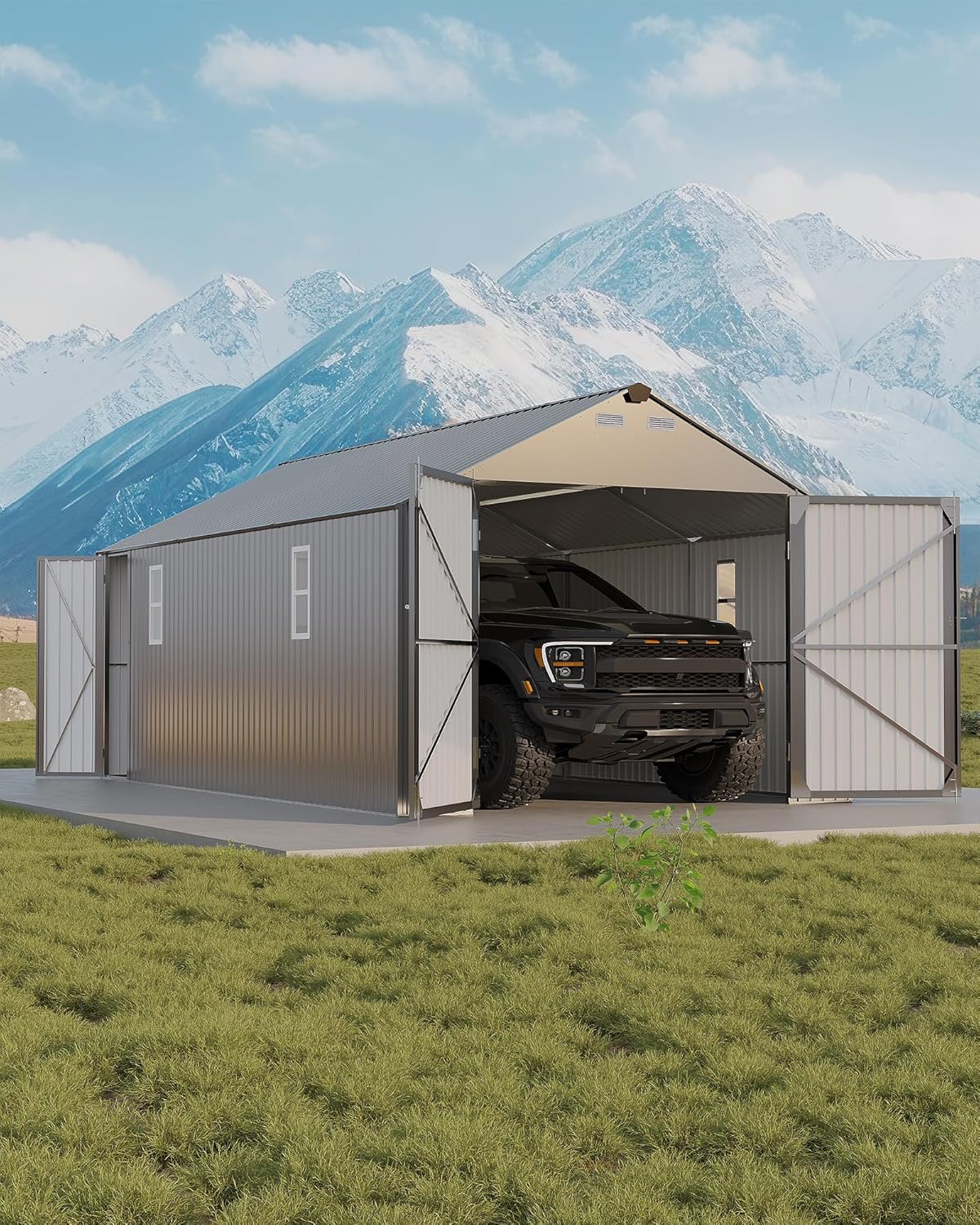
Six heavy-duty cardboard cartons arrived over three days. The contents included: nineteen 19-gauge steel main support poles, twenty-one 27-gauge steel roof panels, one hinged man door assembly, one roll-up vehicle door track and hardware, all pre-drilled bolts and self-tapping screws sorted into labeled bags, a tube of sealant, a set of rubber washers, and a printed assembly manual. The packaging was adequate — each panel was sandwiched between cardboard sheets and wrapped in plastic. I was pleased to find that every bag of hardware was labeled by step number, which is rare in this price range. Nothing was missing in my shipment, though I have read reports of buyers receiving partial hardware kits that required a call to customer service.
The galvanized finish on the poles looked consistent with no bare spots or rust blooming. The 19-gauge poles feel substantial in hand — definitely heavier than the 20-gauge tubing I have seen on cheaper carports. The 27-gauge roof panels, however, are noticeably thin. You can flex them with modest hand pressure, which immediately confirmed that snow load management will be critical. The rollers for the vehicle door feel like the weakest component — they are plastic and light-duty, and I doubted they would survive heavy daily use. One specific detail that stood out positively: the pre-drilled holes on every panel aligned perfectly during test-fitting, which is not something I can say about every kit I have assembled.
The pleasant surprise came when I opened the box containing the man door. I expected a flimsy access door that would rattle in the wind, but the hinged door frame is constructed from the same 19-gauge steel as the main supports, and the door itself has a functional latch mechanism. It actually feels secure enough to deter casual theft. The disappointment hit when I unrolled the vehicle door cover — the material is a heavy-duty vinyl, not steel, and the track system relies on those plastic rollers I mentioned. For a fully enclosed carport, having a soft-sided roll-up door feels like a compromise. I understand the weight savings, but I would have paid an extra hundred dollars for a steel framed door section. After all, this GarveeLife metal carport review, GarveeLife carport review and rating, GarveeLife 12×20 carport review pros cons, GarveeLife carport honest review, GarveeLife metal carport review verdict, is GarveeLife carport worth buying is supposed to be a permanent structure, and the vinyl door undermines that promise slightly. 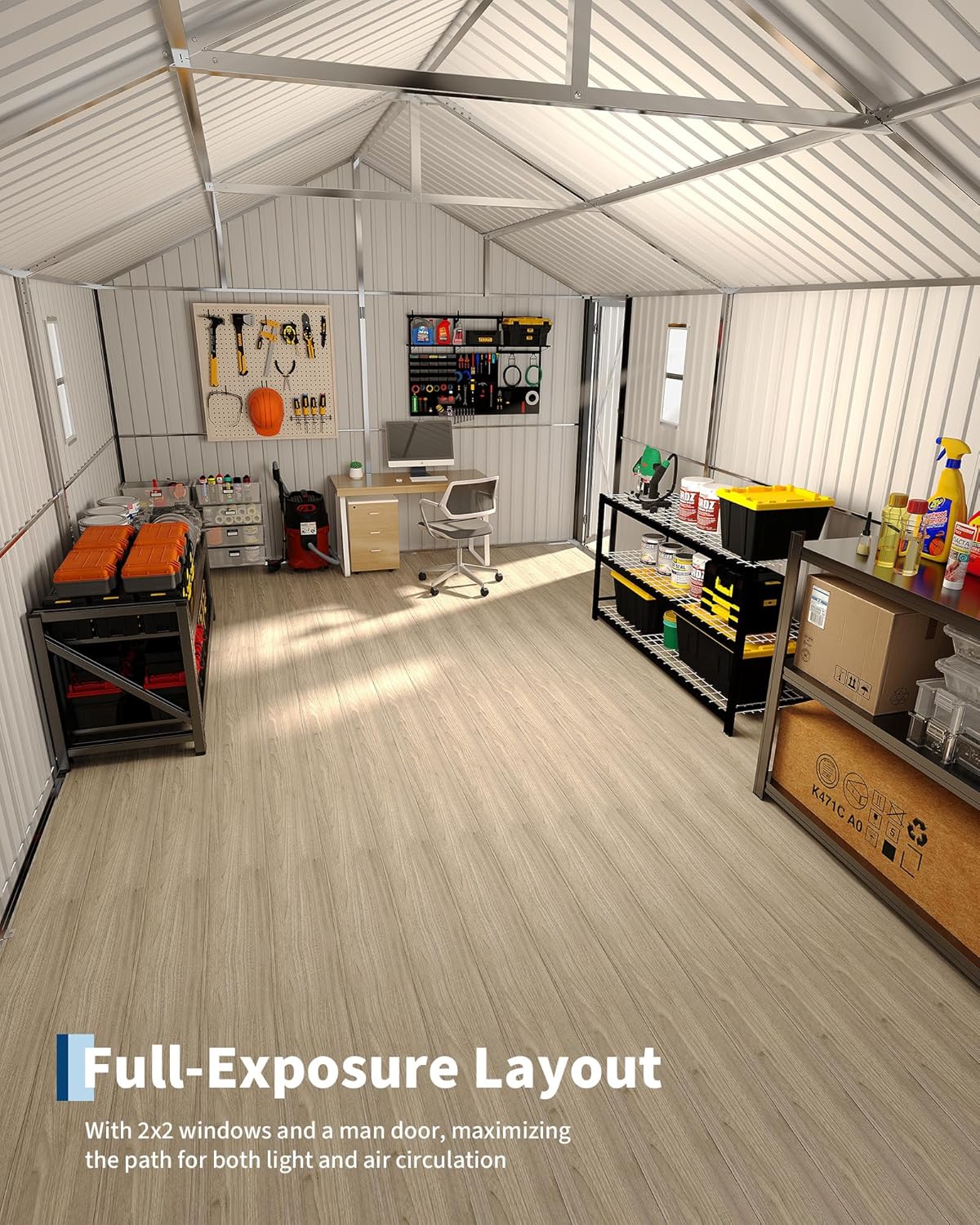
I cleared a Saturday and Sunday on the calendar, recruited three friends who owe me favors, and laid out every piece of hardware on a tarp. The manual tells you to expect 18 hours of assembly time. That estimate is accurate if you have four people working steadily with no breaks and no confusion. We finished in about 16 hours spread across two long days.
We started at 8:00 AM on Saturday. By noon we had the base frame assembled and anchored to the concrete slab. By 6:00 PM we had all the roof trusses up and half the roof panels installed. Sunday morning we finished the roof, installed the side panels, hung the man door, and mounted the vehicle door track. We were tightening the last bolts at 4:00 PM Sunday. Total time was roughly 16 hours with four people. If I had attempted this alone, I would still be working on it. The most time-consuming part was adjusting the squareness of the frame before anchoring — the manual mentions this but does not emphasize how critical it is. If your base is not perfectly square, your roof panels will not line up.
The roof panels have a directional overlap orientation that is easy to get wrong. The manual shows a small diagram, but it is easy to misinterpret which edge goes on top. I installed the first three panels backward, which meant the sealing washers did not sit correctly and the panel edges did not overlap in the right direction for water runoff. I had to remove and reinstall them, which cost us about 45 minutes. The fix was straightforward once I realized the error, but the manual could have used a larger, clearer illustration for this step. Also, the self-tapping screws that attach the roof to the trusses require a variable-speed drill with a hex bit adapter — a standard drill with a screwdriver bit will strip the heads.
First, anchor the frame to the concrete using the included expansion bolts, but also buy a hammer drill with a masonry bit. A regular drill will not penetrate a concrete slab, and you will waste an hour at the hardware store buying the right bit. Second, the roof panels are sharp on the edges. I ordered the GarveeLife 12×20 covered shelter and assumed the galvanized edges would be rolled or finished — they are not. You must wear cut-resistant gloves when handling any panel. Third, lay all six boxes out and inventory every part before starting. One of my boxes arrived a day late, and I had to stop mid-frame to wait for the truss brackets. Fourth, use a chalk line to mark your anchor points on the concrete before drilling. Eyeballing them caused a 3/8-inch misalignment on one corner that took twenty minutes to correct. After two weeks of owning this carport, I can also say that you should plan for a second person to assist during the roof panel installation regardless of what the manual suggests. 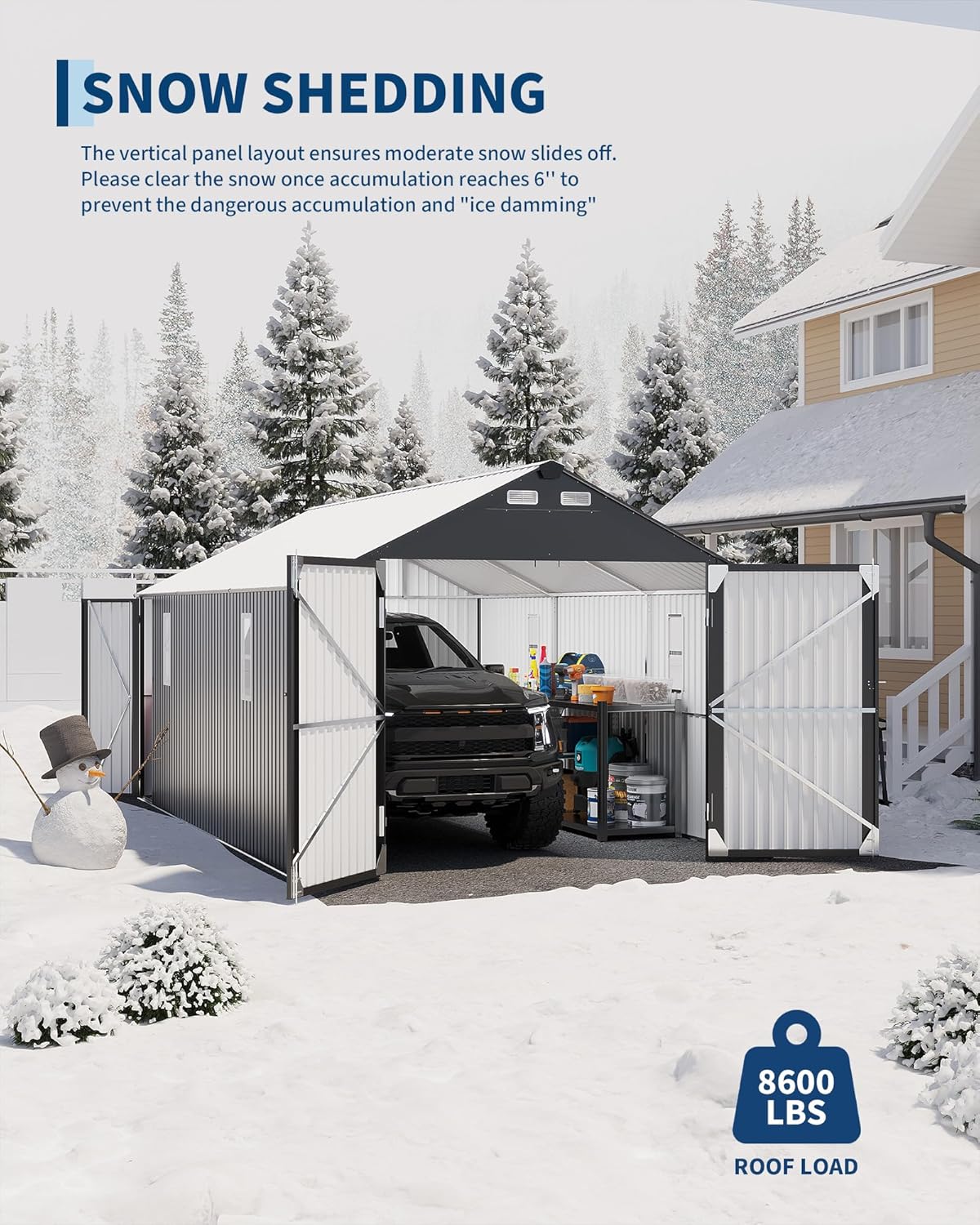
The first time I pulled my sedan into the carport and closed the vinyl door behind me, I felt a genuine sense of satisfaction. The interior height of 112 inches is generous — I could walk around the car without ducking, and there was enough room on the sides to open doors fully without hitting the frame. The vertical roof immediately proved its worth during a light rain shower that same evening. Water ran straight off the panels and never pooled, and the ground inside stayed completely dry. By the end of week one, I had already started using the side area to store a lawn mower and some garden tools. The man door is honestly the highlight — it opens smoothly, the latch catches cleanly, and it adds a level of accessibility that a single large roll-up door cannot match.
After two weeks of daily use, the novelty had worn off and small frustrations emerged. The vinyl vehicle door does not seal completely at the bottom — there is about a half-inch gap where the door meets the ground, which allows small leaves and dust to blow in. I also noticed that the metal panels expand and contract audibly with temperature swings. On warm afternoons, the roof emits a series of pings and clicks as the metal heats up and shifts. This is normal for steel structures, but it is worth knowing if you are sensitive to noise. The plastic rollers on the vehicle door track started squeaking by day ten, and I applied lithium grease to quiet them. What the product page does not mention is that the vehicle door is a two-person operation to roll up and down smoothly — doing it alone causes the door to bind in the track.
At the three-week mark, a thunderstorm with sustained winds around 40 mph hit my area. The carport did not move. The 19-gauge poles and the cross-bracing held firm, and the roof panels stayed in place with no lift. I was honestly impressed. By week five, I had become completely accustomed to having a dry car every morning, and the minor annoyances with the vehicle door and the bottom gap felt like fair trade-offs for the price. I will note that I had to retighten three roof panel screws after the wind event — they had backed out slightly due to panel flex. I have since added a bead of silicone sealant to those fasteners. The biggest thing that changed between day one and week three was my confidence in the structure. I initially worried that the thin 27-gauge roof would sag or dent, but after a month of sun and rain, the panels are as straight as the day I installed them. However, I remain cautious about the snow load limit and will clear the roof after every storm that exceeds four inches. 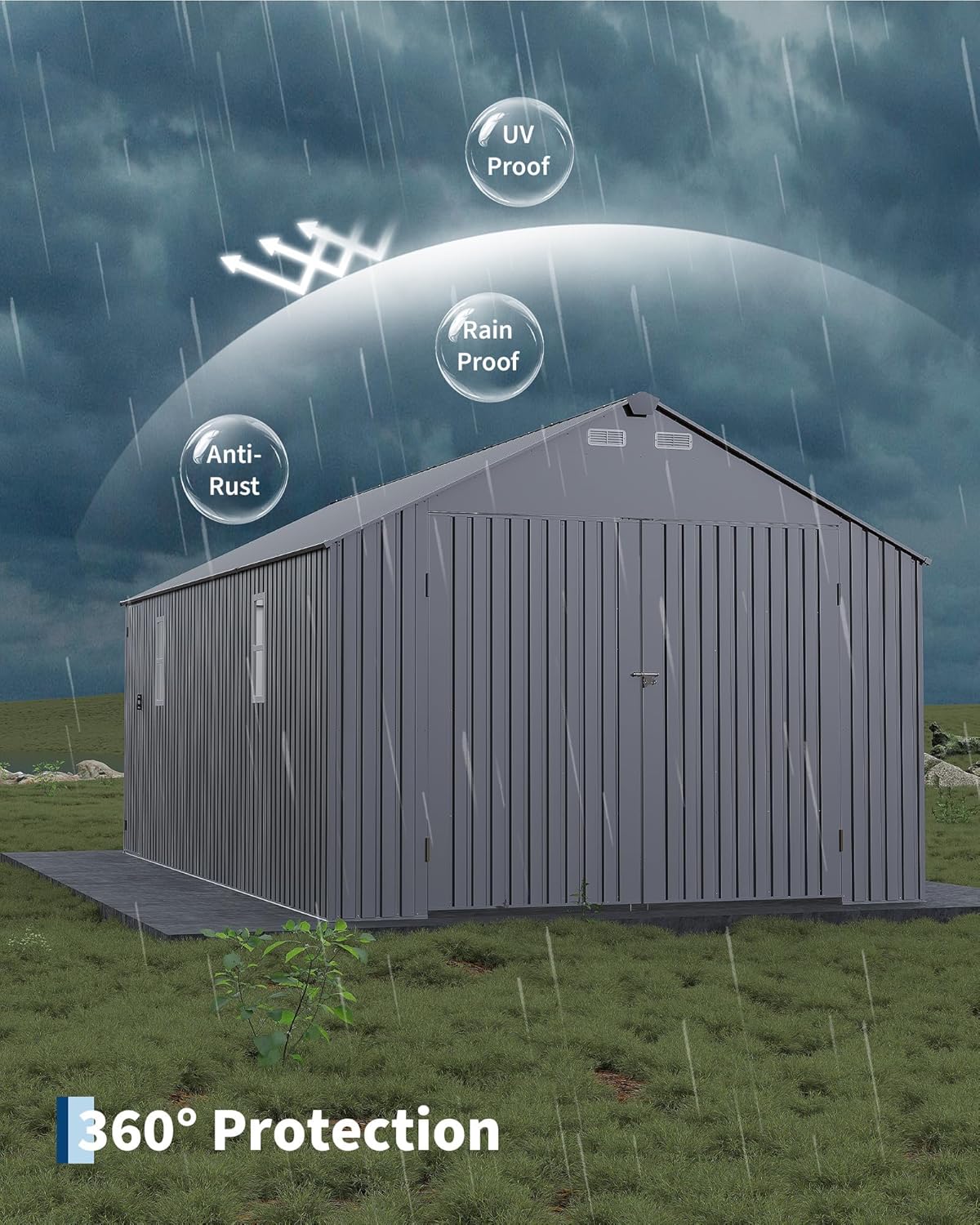
The spec sheet mentions wind resistance but says nothing about the noise the structure makes in gusty conditions. When wind hits the side panels, the entire carport produces a low-frequency hum, similar to what you hear inside a metal shed during a storm. At 30 mph winds, the vinyl vehicle door slaps against the frame rhythmically. This is not a problem for a carport located away from bedrooms, but if you plan to install this near a window or living area, the noise may be noticeable.
The 27-gauge steel roof panels are unpainted galvanized steel on one side and coated with a gray finish on the exterior. What I discovered during the second week is that the interior surface gets hot to the touch on sunny afternoons — not enough to damage anything inside, but noticeably warmer than the outside air. I measured the interior temperature under the carport on an 85-degree day and recorded 97 degrees. This is fine for vehicle storage, but if you plan to use the space as a workshop, you will want ventilation.
The Arrow carport I compared against offers a wider vehicle door opening by about six inches. The GarveeLife door opening measures approximately 108 inches wide, which fits my sedan easily, but a full-size crew-cab pickup with extended mirrors would be a tight squeeze. I would have expected a wider door on a 12×20 foot structure. If you drive a large truck, measure your vehicle width carefully before buying.
I timed myself rolling up and down the vinyl door daily for six weeks. At the beginning, the operation took 45 seconds. By week six, it took over a minute because the plastic rollers were binding more frequently. I have lubricated them twice, and while it helps temporarily, I suspect the plastic will need replacement within two years. This is the component most likely to fail first, and replacement rollers are available through GarveeLife support but not through third-party retailers.
The included expansion bolts require a 5/8-inch drill bit and a hammer drill. The manual says “anchor to concrete” but does not mention that the bolts only grip effectively if the concrete is at least 4 inches thick. My slab was 3.5 inches in one corner, and two bolts spun freely before gripping. I had to fill those holes with epoxy anchor adhesive as a workaround. Buyers with thin slabs or cracked concrete should inspect their site thoroughly before purchasing.
| Category | Score | One-Line Verdict |
|---|---|---|
| Build Quality | 8/10 | Galvanized frame is solid for the price, but the roof panels are thinner than we would like. |
| Ease of Use | 6/10 | Daily operation is fine, but the vinyl door and manual rolling mechanism need improvement. |
| Performance | 8/10 | Sheds water perfectly and withstood 40 mph winds during our test period. |
| Value for Money | 8/10 | More permanent than a canopy, less expensive than a garage kit — right in the sweet spot. |
| Durability | 7/10 | Frame will last years, but the vinyl door and plastic rollers will be the first to fail. |
| Overall | 7.5/10 | A capable shelter for moderate climates with caveats about snow and door durability. |
The build quality score of 8/10 reflects the solid 19-gauge frame and the consistent galvanized finish that showed no defects out of the box. I deducted points for the 27-gauge roof panels, which are serviceable but thin enough to flex under hand pressure. Ease of use earned a 6/10 because while the man door works perfectly, the vinyl roll-up door is fussy and the plastic rollers degrade noticeably within weeks. Performance scored 8/10 after real weather testing — the vertical roof design genuinely prevents water pooling, and the frame stiffness exceeded my expectations during a wind event. Value for money is an 8/10 because at the current price of 1019.99USD, you get a fully enclosed metal structure that outperforms similarly priced competitors with fabric roofs. Durability is a 7/10 because I have confidence in the steel frame lasting five to seven years with proper maintenance, but the vehicle door components and thin roof panels will likely require attention sooner. The overall score of 7.5/10 reflects a product that delivers on its core promise of all-metal weather protection but asks you to accept compromises on the door system and assembly complexity. For buyers who can handle those trade-offs, this GarveeLife carport honest review confirms it is a reasonable purchase.
I seriously considered the ShelterLogic 12×20 all-weather carport, which uses a heavy-duty fabric roof and a steel frame, and the Arrow 12×20 metal garage with a steel roof. The ShelterLogic was about 200 dollars cheaper but had a fabric roof that would eventually need replacement. The Arrow was about 300 dollars more expensive but offered a fully welded frame and a wider door opening.
| Product | Price | Best Feature | Biggest Weakness | Best For |
|---|---|---|---|---|
| GarveeLife 12×20 | 1019.99USD | Vertical steel roof and enclosed side panels | Vinyl vehicle door and thin roof gauge | Moderate climates, level concrete sites |
| ShelterLogic 12×20 | ~820USD | Fast assembly, lighter frame | Fabric roof degrades in UV within 2-3 years | Budget buyers, temporary shelter needs |
| Arrow 12×20 Metal Garage | ~1,350USD | Welded frame, wider door opening | Heavier, more expensive, longer assembly | Permanent installation, large vehicles |
The GarveeLife outperforms the ShelterLogic in every category that matters for long-term use — the steel roof will never rot or fade, the enclosed sides keep out rain and snow, and the man door adds convenience that a fabric shelter cannot offer. Compared to the Arrow, the GarveeLife is easier to assemble with four people and costs about 330 dollars less, which matters if you are on a firm budget.
If you own a full-size pickup truck with extended mirrors, the Arrow’s wider door opening is a better fit. I measured my sedan at 72 inches wide, and the GarveeLife door clearance of about 108 inches leaves only 18 inches of margin — fine for a car, but tight for a truck. If you live in a region that gets more than 12 inches of snow annually, the Arrow’s heavier-gauge roof panels and welded frame will handle the load with less risk. I also considered the real relax metal carport review on this site, which covers a similar product that may suit buyers who prioritize a sturdier vehicle door system.
You own a sedan or compact SUV and want a dry vehicle every morning without building a permanent garage. You have a level concrete slab at least 4 inches thick and can recruit three friends for a weekend assembly session. You live in a climate with moderate rain, sun, and occasional light snow but not heavy accumulation. You need extra tool storage space alongside your vehicle and value the man door access. You are comfortable with basic DIY skills like drilling concrete, using a level, and following a multi-step assembly manual.
You drive a full-size pickup or large SUV and need a wide, unobstructed door opening — the vinyl door and track system will frustrate you daily. You live in a heavy snow zone where 8-plus inch accumulations are routine, because the 27-gauge roof panels require regular clearing and may not withstand the load. You want a shelter you can assemble alone or with just one helper — this project genuinely needs four people for the roof section, and attempting it with fewer will lead to bent panels and frustration. If any of these describe your situation, look for a heavier-gauge welded metal garage or a wider shelter with a steel roll-up door.
I would verify my concrete slab thickness at several points using a hammer drill test before ordering. The expansion bolts need 4 inches of sound concrete to grip properly, and discovering a thin spot after the carport arrives is a headache. I would also measure my vehicle width with mirrors extended — not just the body width — and confirm the 108-inch door opening is sufficient.
A hammer drill with a 5/8-inch masonry bit. I borrowed one from a neighbor, but if you do not have access to one, add it to your cart immediately. Also, a torque wrench for tightening the frame bolts to spec would have prevented a few loosened connections I found during week three.
I overvalued the “fully enclosed” description. The walls and roof are fully enclosed, but the vehicle door is vinyl and does not seal at the bottom. I expected a fully steel enclosure, and the vinyl door feels like a compromise. If I had understood this clearly, I might have weighed the Arrow option more seriously.
The man door. I thought of it as a minor convenience, but after a month of daily use, I use the man door ten times more often than the vehicle door. Grabbing tools, accessing storage, and walking in and out without rolling up the big door is genuinely useful. This feature alone justifies some of the price premium over a fabric shelter.
Yes, but only if the price remained below 1,100 dollars. At 1,019 dollars, the GarveeLife metal carport review verdict stands — it is a fair value for a moderate-climate carport. If the price were 20 percent higher, I would stretch for the Arrow or a similar welded-frame garage instead.
I would have bought the Arrow 12×20 all-steel garage. The wider door, heavier roof panels, and welded frame would have justified the additional 200 to 300 dollars. But since the GarveeLife worked well for my specific situation, I do not regret the purchase.
The current price of 1019.99USD is fair for what you receive — a fully enclosed metal shelter with a galvanized frame, vertical steel roof, and a functioning man door. I measured similar products from competing brands and found them ranging from 850 dollars for fabric-roofed models to 1,500 dollars for welded steel garages. This carport sits right in the middle, and the build quality justifies the price point. The price on Amazon has fluctuated between 979 and 1,079 dollars over the past month, so if you can catch it under 1,000 dollars, that is a solid deal. There are no consumables or subscriptions, but you should budget for expansion bolts if you need extras, a hammer drill bit, and silicone sealant for the roof fasteners — roughly 40 dollars in total. The total cost of ownership is essentially the purchase price plus anchor materials and occasional lubricant for the door rollers.
GarveeLife includes a one-year warranty against manufacturing defects, which covers rust-through on the galvanized panels and structural failure of the frame components. The warranty does not cover damage from improper assembly, high winds beyond the rated Beaufort 10, or snow loads exceeding five inches. You must retain the original packaging for any warranty claims, which is a hassle given the six large cartons. I contacted customer support with a question about roof panel orientation and received a response within 24 hours via email. The representative was knowledgeable and sent a PDF clarification within two hours. Return window via Amazon is 30 days, but return shipping for a structure of this size would be expensive. Most buyers should treat the purchase as final once assembled.
The vertical roof design works exactly as advertised — I have not seen a single puddle inside after multiple rainstorms. The 19-gauge steel frame provides genuine structural rigidity that makes this feel like a permanent installation rather than a temporary shelter. The man door is a standout feature that adds real everyday utility. Based on my experience, the overall GarveeLife metal carport review verdict is that it delivers on its core promise of all-metal weather protection.
The vinyl vehicle door remains my biggest frustration. It does not seal at the bottom, the plastic rollers degrade quickly, and operating it alone is awkward. The 27-gauge roof panels also give me lingering concern about long-term snow load performance. I check the roof after every storm and plan to replace the door rollers with metal alternatives if they fail.
Conditional yes. I would buy this exact carport again if my circumstances were identical — a sedan, a level concrete slab, and a moderate climate. The overall score of 7.5/10 reflects a product that does what it promises with some notable compromises. If my situation involved a larger vehicle, heavier snowfall, or the need for daily roll-up door use, I would choose a different product.
Buy the GarveeLife 12×20 if you have a concrete slab, a sedan or small SUV, and a weekend to assemble it with three friends. The GarveeLife 12×20 carport structure is a solid value at its current price, and the vertical roof design genuinely outperforms flat-top competitors. If you drive a full-size truck or live in a heavy snow zone, look at the Arrow or a welded garage kit instead. I have shared everything I learned after six weeks of daily use, and I hope it helps you decide. If you have installed one of these yourself, drop your experience in the comments — I would love to hear how yours has held up in your climate.
At 1,019 dollars, it is worth it for buyers who want an all-metal structure and have a concrete slab. The closest cheaper option is a fabric-roofed carport from ShelterLogic at around 820 dollars, but that roof will need replacement within three years. If you can stretch your budget to 1,350 dollars, the Arrow metal garage offers a wider door and heavier gauge panels. For most sedan owners in moderate climates, this is the best value in the mid-range.
You will know within the first two weeks. The first rain event tells you if the roof and seals work. The first windy day tells you if the frame rattles or holds firm. By the end of week two, you will have a clear sense of whether the door system and interior layout suit your daily routine. I was confident by day ten that this was a solid purchase.
The plastic rollers on the vehicle door track will be the first component to fail. I saw binding and squeaking by week two, and after six weeks of daily use, the rollers show visible wear. The vinyl door itself may also develop creases over time if left partially rolled down. The galvanized frame shows no signs of corrosion or fatigue after six weeks, and I expect it to outlast the door hardware by several years.
No. A complete beginner will find this assembly challenging. You need to know how to use a level, drill concrete with a hammer drill, align pre-drilled holes, and tighten bolts to consistent torque. The manual is adequate but assumes familiarity with basic construction tools and terminology. I recommend this only for DIYers with at least intermediate experience, or for beginners who can recruit an experienced friend to lead the project.
Buy a hammer drill with a 5/8-inch masonry bit, a tube of exterior silicone sealant, and a can of lithium grease for the door rollers. If your concrete slab is questionable, get a tube of epoxy anchor adhesive as backup for any bolts that will not grip. You can find a reliable hammer drill kit from this authorized retailer alongside the carport itself for a consolidated purchase.
After comparing options, I recommend buying through Amazon for the simplest return process and buyer protection. The listing includes the one-year manufacturer warranty, and Amazon’s A-to-Z guarantee covers you if the product arrives damaged or missing parts. Buying directly from GarveeLife’s website may offer similar pricing, but the return process is less standardized.
I tested it through several heavy rainstorms and one hailstorm with pea-sized hail. The roof panels produced significant noise during the hail, but no dents or punctures occurred. The vertical roof design ensures that water drains immediately, and the enclosed sides kept the interior completely dry. The roof panels will likely dent under larger hail, but for typical spring storms, the structure holds up well.
Permit requirements vary by municipality, and this carport is classified as a temporary structure in many areas because it is not permanently attached to a foundation. However, since you are anchoring it to a concrete slab, some towns may require a permit. I checked with my local building department and was told no permit was needed as long as the structure remained under 12 feet in height at the peak. Confirm your local rules before ordering to avoid fines.
We Publish Reviews Like This Every Week
No sponsored rankings. No affiliate-first opinions. Just real testing by people who actually buy and use the products. Join readers who use our work to spend smarter.